Abundant and accessible outdoor spaces accommodate instruction, play, and exploration
The COVID-19 pandemic and the growing body of research about the mental and physical benefits of time spent outdoors drove the creation of plentiful and easily accessible outdoor spaces. The classroom wing includes a sunken courtyard under the roof overhang, and all first floor classrooms have access to this space. The second floor integrates an outdoor roof deck for classes and events.
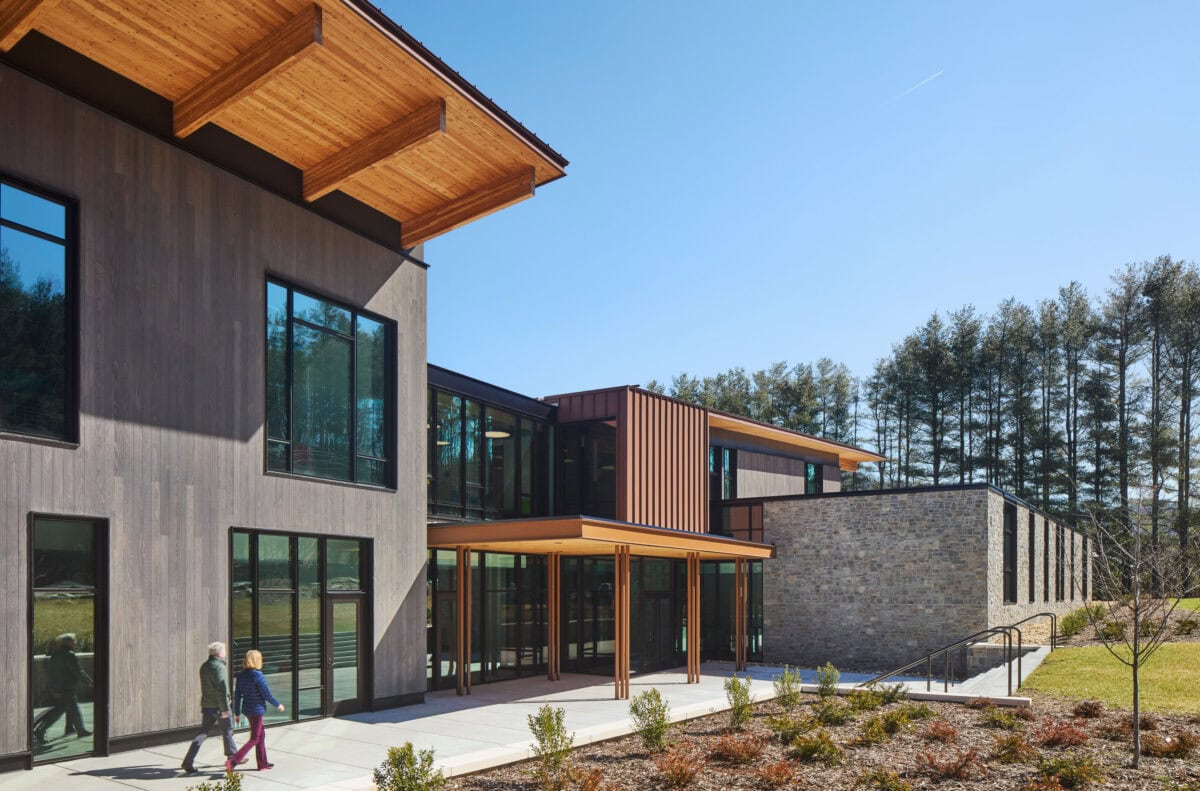 Play spaces are accessed from the activities wing, while vegetable gardens that will be cultivated by the students are directly adjacent to the cafeteria. A rain cistern collects water to irrigate these gardens – functioning as both a learning tool and a way to reduce water use.
Community access and connection to the environment were key design priorities
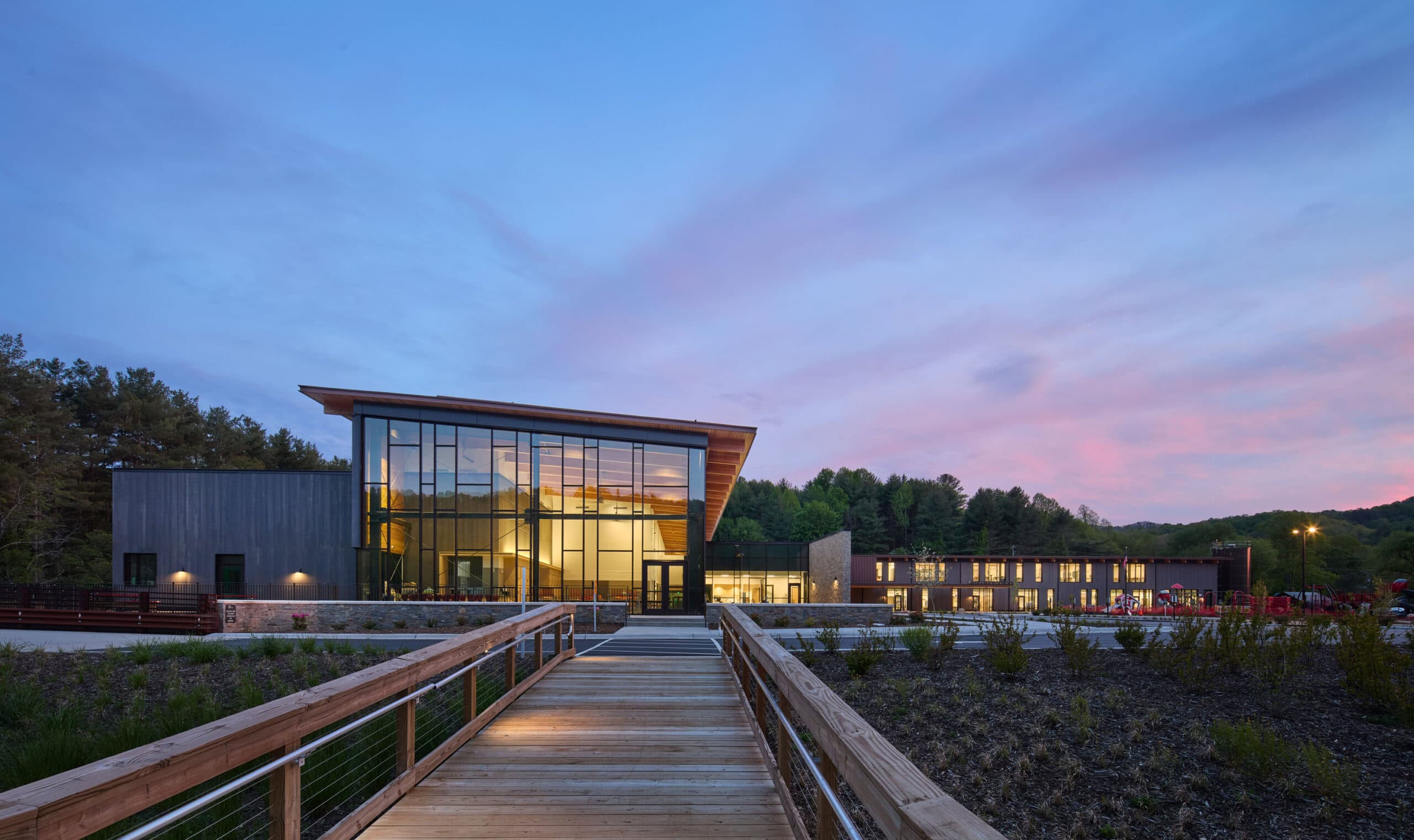
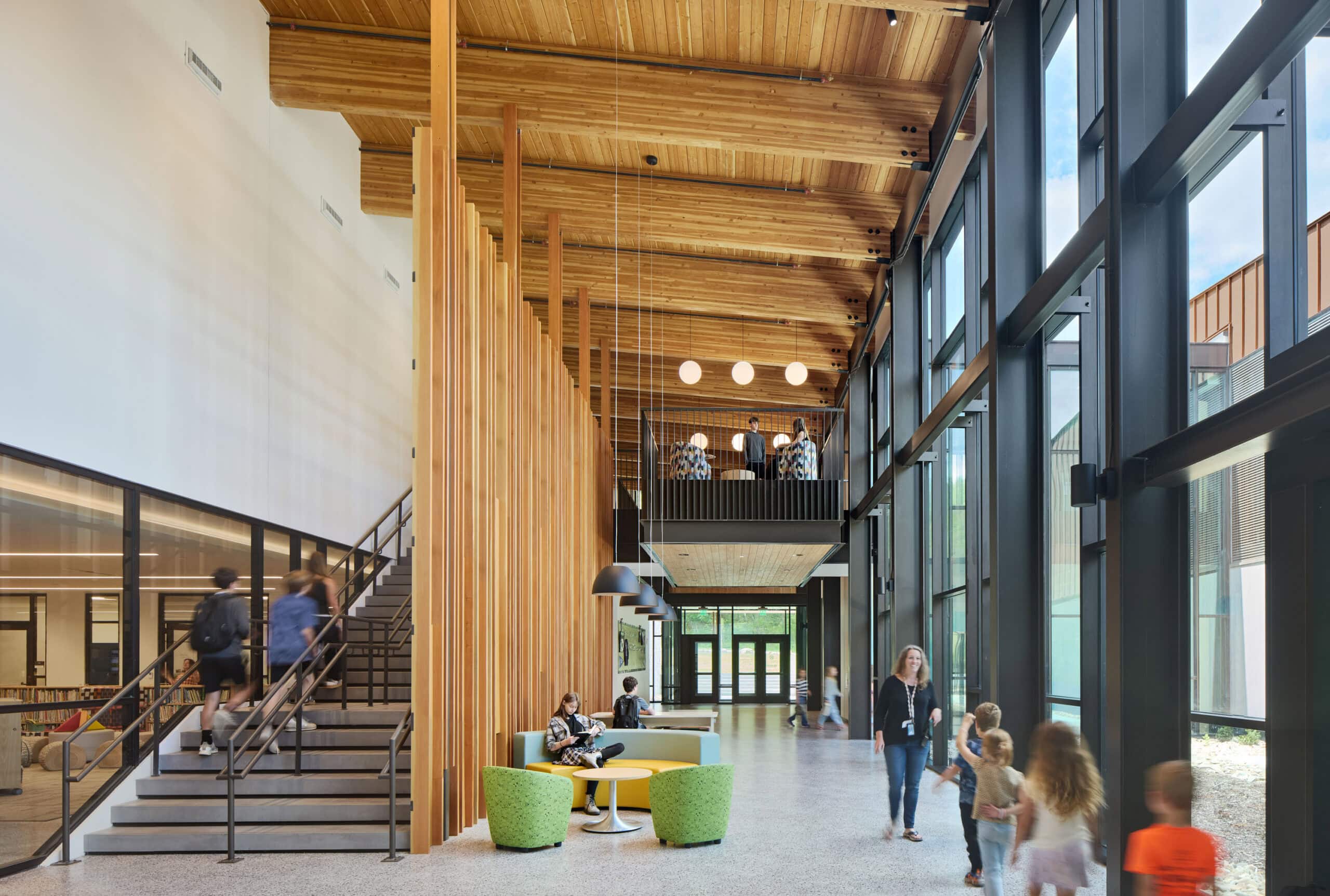
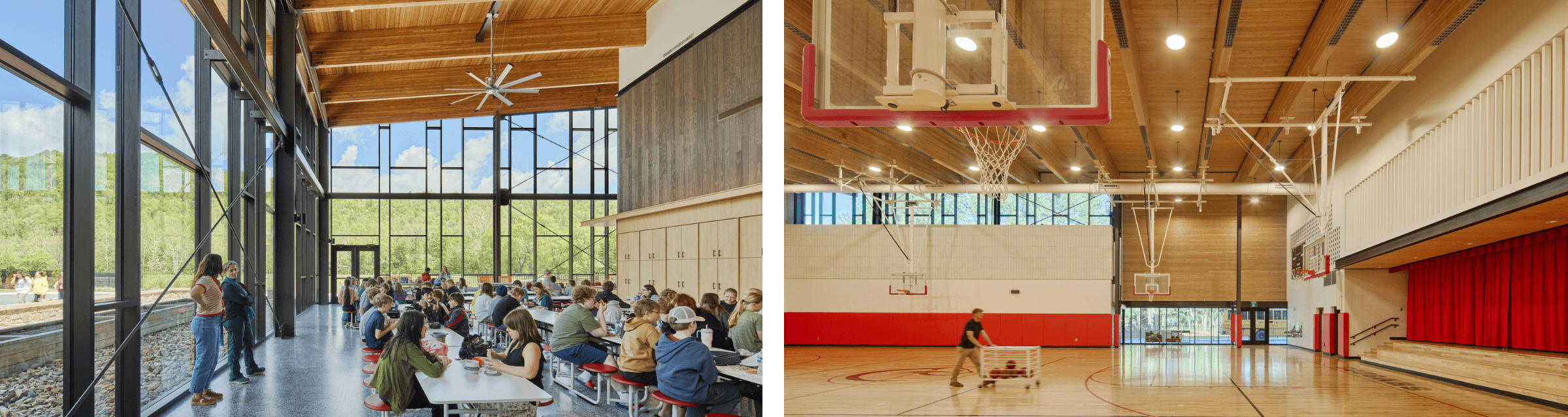
Integration with the community and connection to the environment were key priorities that informed the design. Throughout the building, extensive glazing supports a strong connection with the outdoors. The cafeteria features soaring views to the mountains and is intended as both a student and community space, and the gymnasium is high school size to accommodate community activities and recreation.
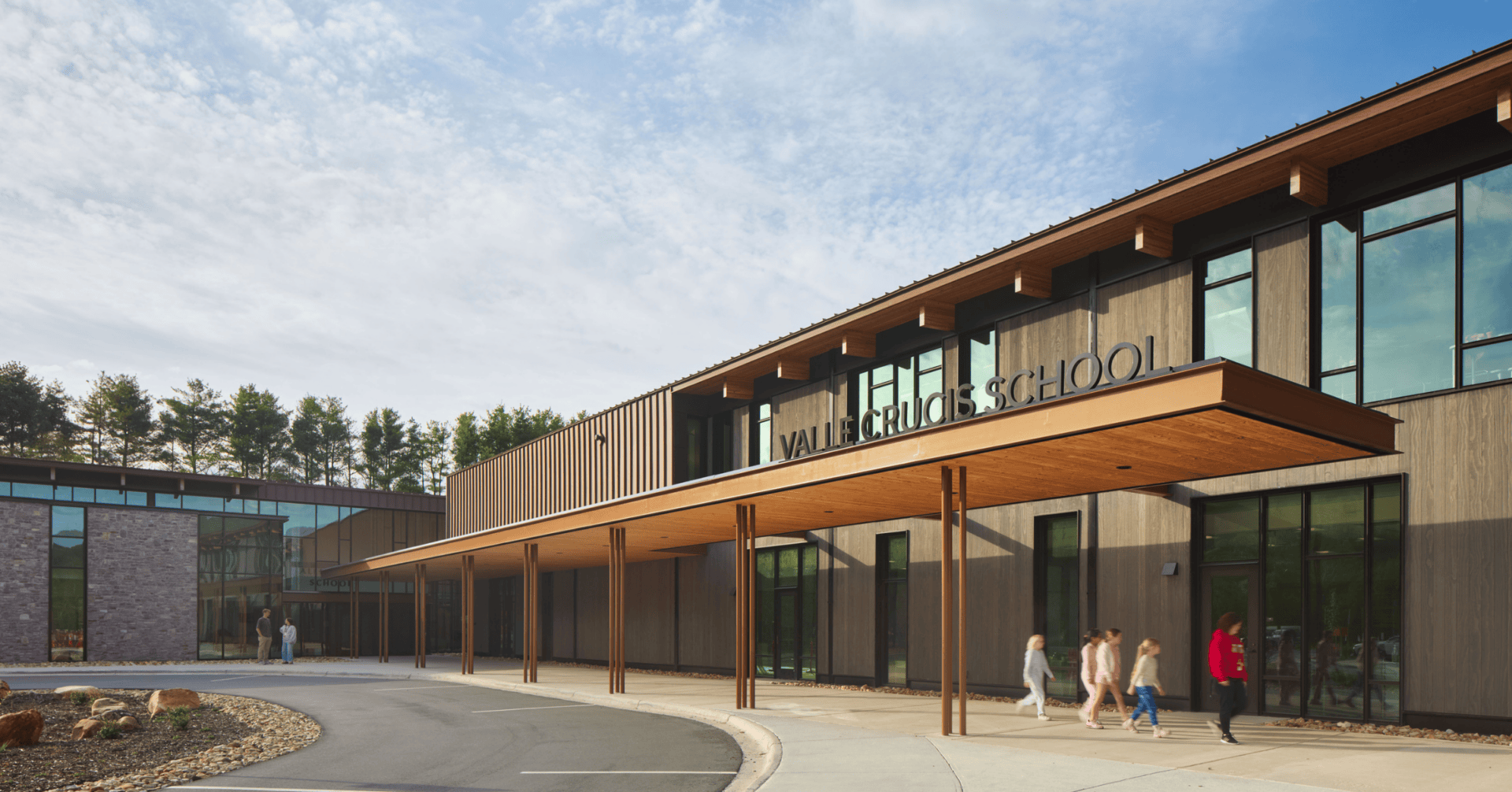
 Community access extends to the outdoor spaces, which include plans to create a walk along the Watauga River that will connect to a nearby public park. While the site sits almost entirely within the flood plain, the design strategically leverages the topography for both civic presence and flood resilience. Situated at the high point of the site and fronting the main road, the building establishes a welcoming street front. The back of the site slopes down toward the river. To safeguard the structure from recurring flood events, fill was added to raise the building pad four feet above the flood plain. Pedestrian and vehicular bridges promote the preservation of existing wetlands. To blend with the surrounding neighborhood which include a boardwalk across the preserved wetlands and plans to create and minimize traffic back-ups on the main road during drop-off and pick-up, the site design locates the parking behind the school and improves the traffic pattern for parents and buses.