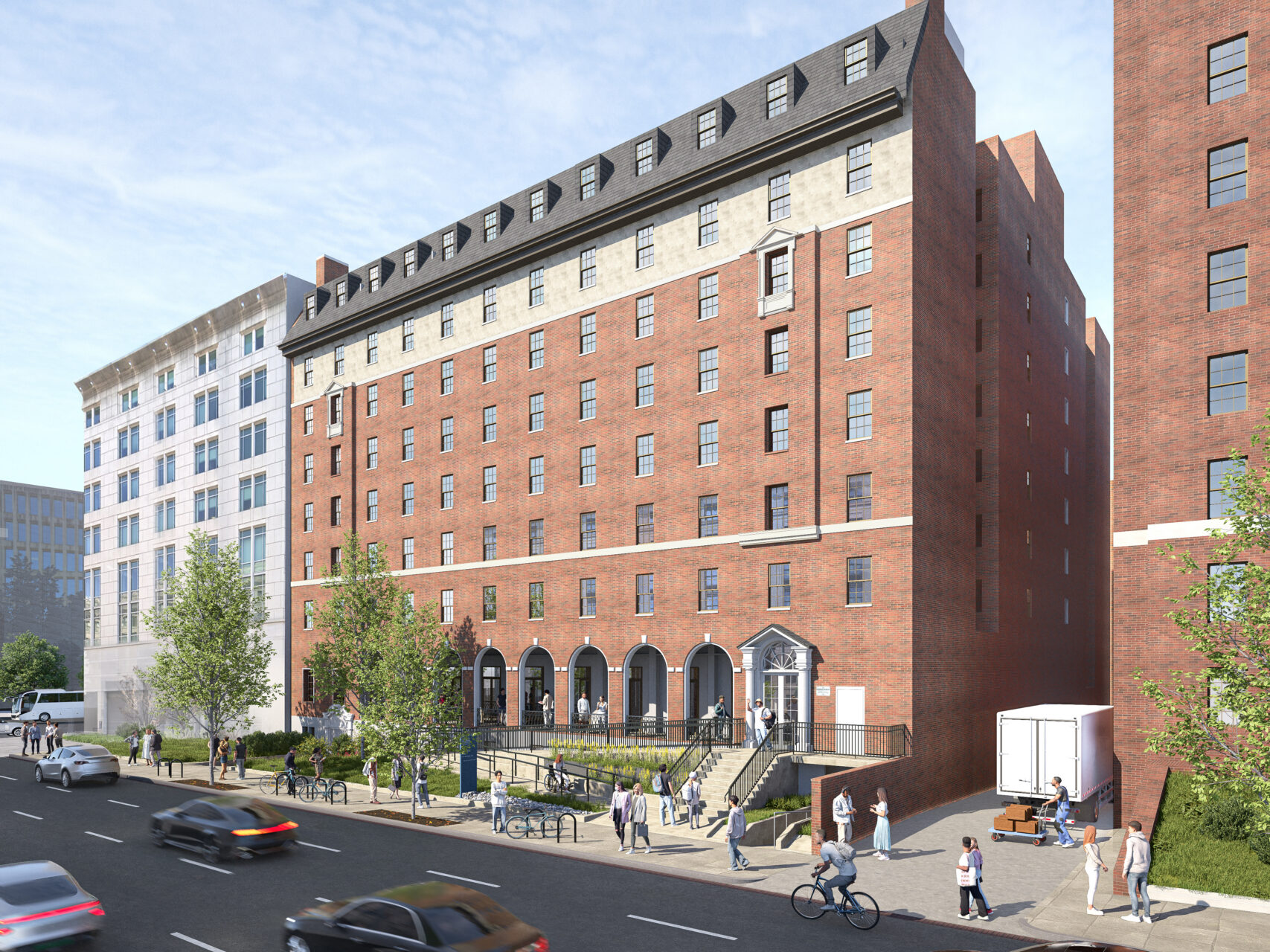
With views of the Washington Monument and other iconic landmarks, George Washington University’s Mitchell Hall is located just a few blocks west of the White House in the very heart of Washington, D.C. The residence building, aided by a patchwork of renovations, has served inhabitants for 100 years. However, it struggled to meet the needs of campus and modern student life with dated and inaccessible spaces. Partnering with Manhattan Construction, Clark Nexsen transformed the hall into a modern and accessible student housing facility while preserving its historic charm, creating an environment where all residents can live, study, and thrive.
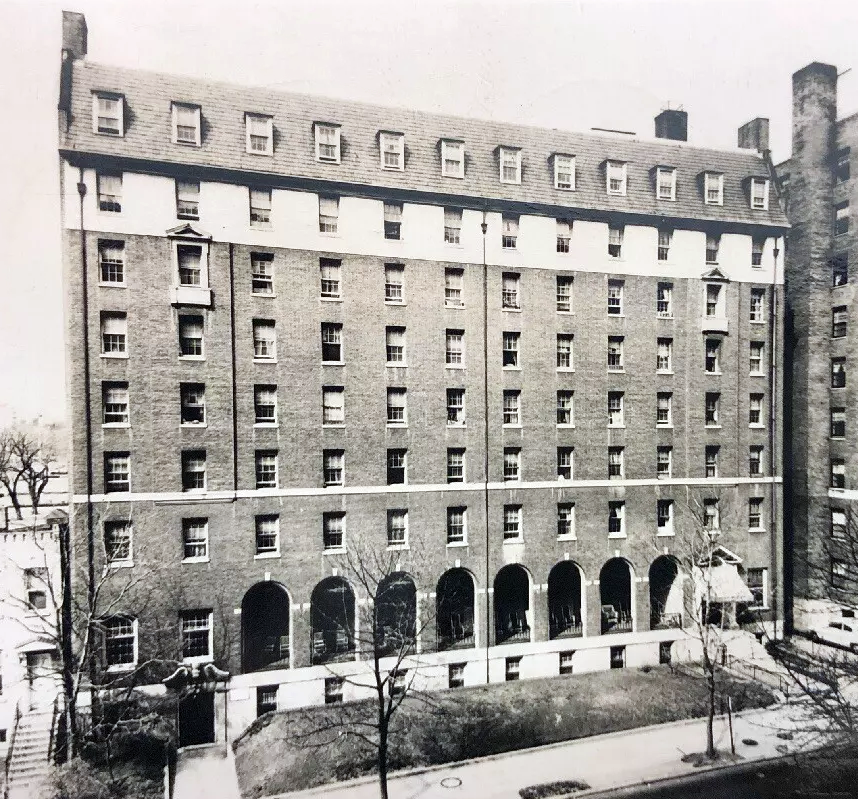
The All States Hotel, later renamed Mitchell Hall after it was purchased by George Washington University, date unknown.
Built in 1926, the building now known as Mitchell Hall was once the All States Hotel, a cooperatively owned hotel organized by women for women. Women’s residential hotels, like the All States Hotel, provided a solution to the scarcity in safe, affordable housing for women; however, it was a solution that often came with restrictions, such as curfews and strict visitor rules. But as time passed, so did the need for gendered housing. After nearly 40 years, the All States Hotel was purchased by George Washington University.
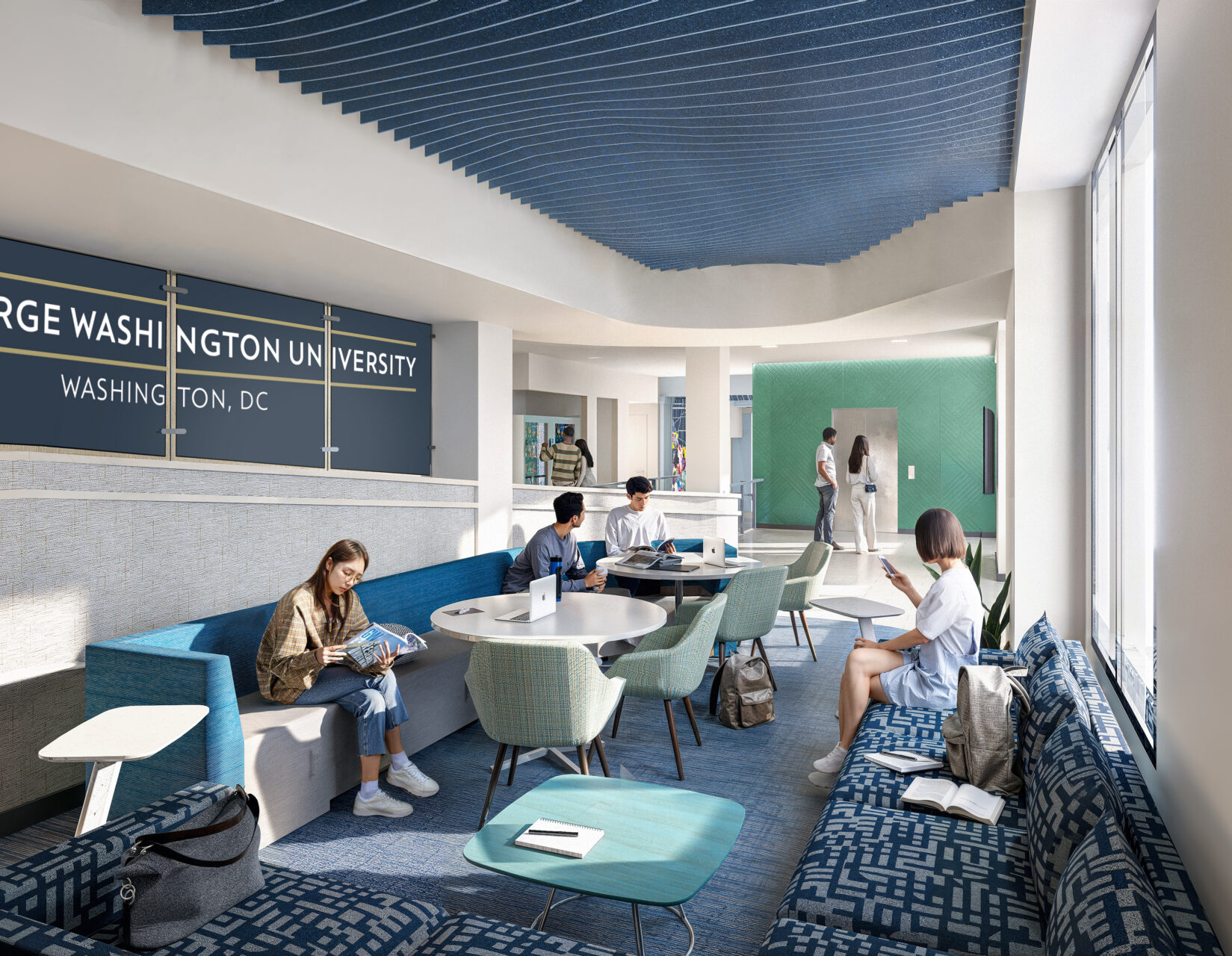
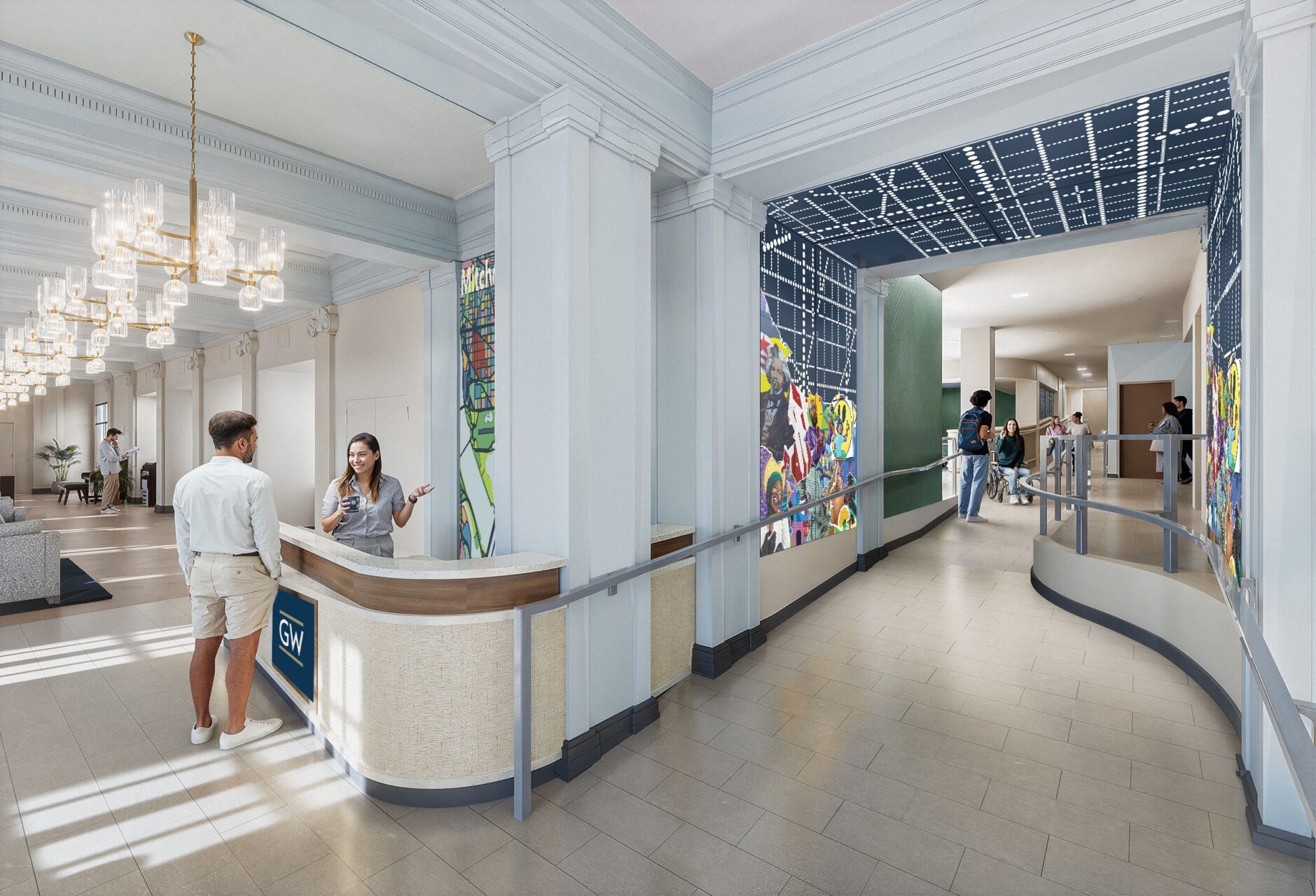
Towering eight stories, Mitchell Hall’s exterior continues to tell its rich history, with its red brick walls and arched veranda recognizable from old photographs and postcards. Students can climb the historic stairs or utilize the new exterior ramp, which stands where horses and carriages once parked. Entering through the lobby and reception space, the renovated first floor is composed of lounges and study areas outfitted with new materials from the carpet to the ceiling. However, it retains its historic character through the preservation of the original columns and crown molding along with several windows and doors from its 1926 construction. Whether catching up with friends or collaborating with classmates, students will find a variety of seating options to suit their needs, with couches, study booths, and more all accented by George Washington University’s familiar blue.
At the heart of this renovation was making Mitchell Hall accessible to all students. In addition to the new entrance ramp, interior ramps are found throughout the once inaccessible first floor, enabling students to move together. Traveling up the first ramp, visitors and residents will pass through The Portal, an illuminated graphical art piece designed by Clark Nexsen that transitions you from the historic entry up into a modern lounge space. This art piece, featuring a collage of street art set within D.C.’s Eight Wards, sets the stage for the graphical panels found throughout the building. These panels correlate the building’s eight floors to each of D.C.’s Eight Wards by showcasing street art from that Ward as a wayfinding element. From this lounge, a new elevator connects all building floors from the basement and rooftop, which had previously been inaccessible.
The upper levels are dedicated to residences, which are single rooms furnished with full-size beds. On each residential floor, student lounges were added to create opportunities for community building along with kitchens on every other level. The design of each floor aims to maximize new types of amenities students have come to expect, including laundry on every floor, numerous individual bathroom suites, a trash and recycling chute, and social gathering spaces. The basement and the rooftop also saw improvements, with the basement dance studio receiving new finishes and the rooftop getting refreshed with new seating for students to relax and enjoy views of D.C. landmarks.
Breaking university records and selling out months ahead of its opening for the fall 2026 semester, Mitchell Hall’s renovation has garnered much excitement with students rapidly claiming the 300 available beds. This LEED Gold transformation showcases the university’s dedication to student wellbeing and commitment to providing spaces that facilitate excellence using sustainable practices. A celebration of the past that looks to the future, the hall’s balance of historical charm and modern amenities will serve generations of students to come at George Washington University.
