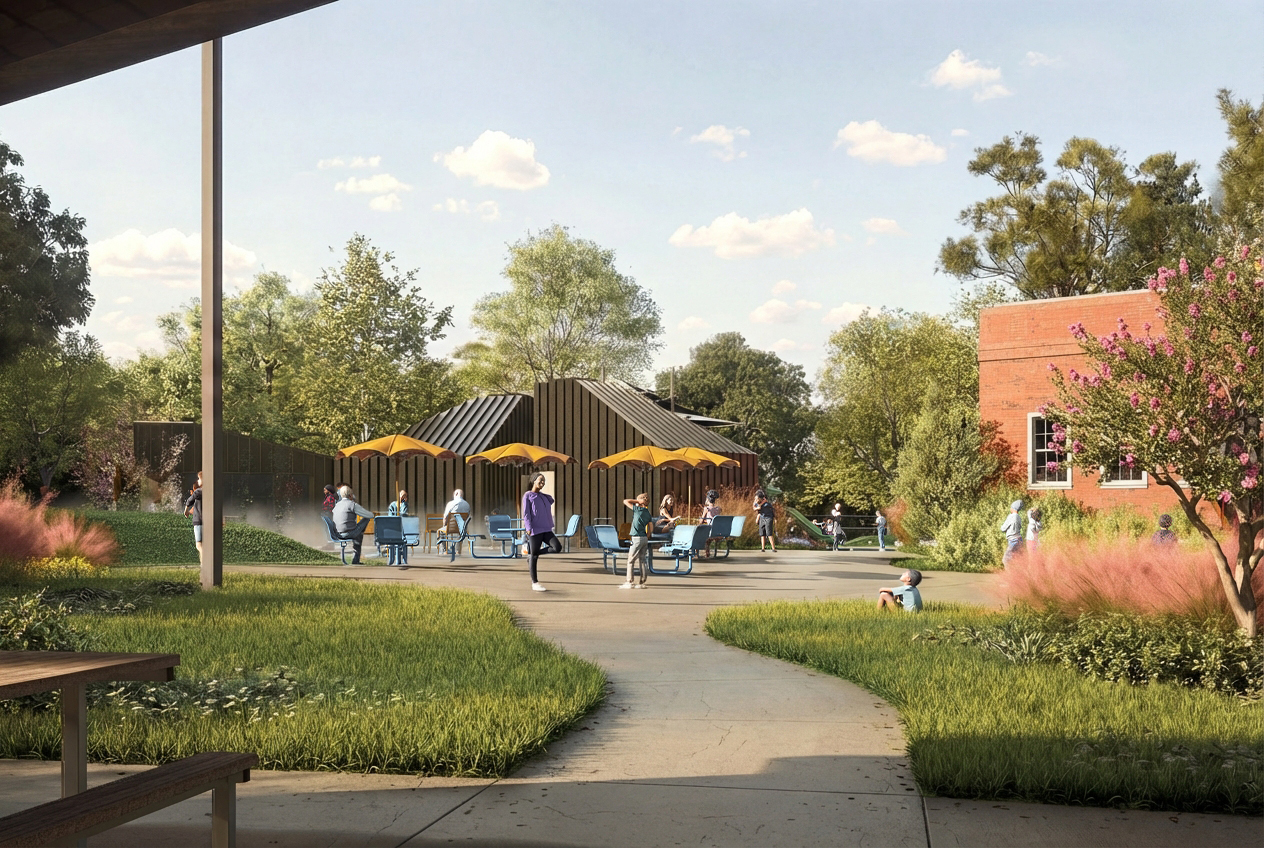
Located in the Berry O’Kelly Historic District of Raleigh, North Carolina, the renovated Method Community Park will upgrade one of the city’s historically significant community resources. Working closely with the City of Raleigh and the Method community, the improvements will modernize the existing Raleigh Historic Landmark buildings, provide new amenities, and preserve the rich history of the district, which is listed on the National Register of Historic Places.
The Method Community Park is embedded in Method, a neighborhood in southwest Raleigh that became a hub for freedmen after the American Civil War. In 1910, Berry O’Kelly, a prominent leader and successful Black businessman in Raleigh, helped sponsor the opening of the Berry O’Kelly Training School, which was one of the first rural high schools for African Americans in the state. Providing an academic education and training in the industrial and vocational arts, O’Kelly was also able to solicit the help of philanthropists, such as Julius Rosenwald of the Sears-Roebuck Foundation, to expand the school into a campus of eight buildings. These contributions by Rosenwald made the Berry O’Kelly Training School the 4,000th Rosenwald School ever constructed in the United States. By 1931, it was North Carolina’s largest school for Black students, and by 1941, 250 students were enrolled. However, with the end of segregation in the late 1960s, enrollment wanned, and the school closed in 1966. As a result, most of the campus buildings fell into disrepair and were ultimately demolished. Today, the Pioneers Building, built in 1926 and originally called the Agricultural Building, and the Berry O’Kelly/Harveleigh White Community Center building, built in 1959 serving as the school’s cafeteria and gymnasium, are the only remaining buildings of the original campus, with the Pioneers Building being rehabilitated in 1992 after a fire in the 1980s.
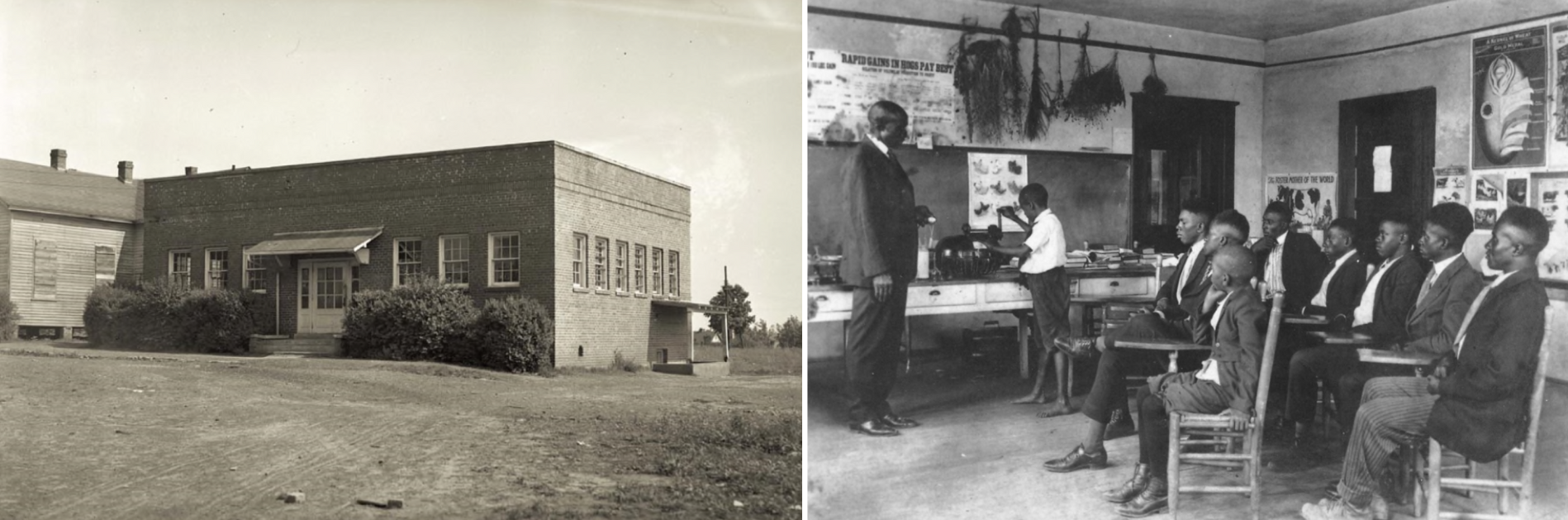
Left, the Agricultural Building of the Berry O’Kelly School, later renamed the Pioneers Building. Right, students learning at the Agricultural Building of the Berry O’Kelly School, date unknown. Courtesy, State Archives of North Carolina, left, and the City of Raleigh Museum, right.
Due to the historic nature and age of the facilities, Clark Nexsen, along with KEi Architects and Raymond Engineering, will lead a careful interior renovation and exterior restoration of the Pioneers Building and the Berry O’Kelly/Harveleigh White Community Center building. On the exterior, both structures will receive brick masonry tuckpointing and repairs, new egress lighting, and the refurbishment or replacement in-kind of exterior wood and steel doors, frames, transoms, and windows. Great care will be taken to ensure that replacement materials, such as the brick, match the existing structure, adhering to rehabilitation standards of the Secretary of the Interior and guidelines provided by the National Park Service Preservation Briefs. Both buildings will receive new membrane roofs, extending the longevity and ensuring the use of these structures for years to come.
Inside the Berry O’Kelly/Harveleigh White Community Center, a renovated entry and lobby space will connect with a new north-south corridor, providing access to the gymnasium and updated bathrooms. The gym will get new, specialized rubber athletic flooring, providing increased flexibility for both athletic and community programming. The building area to the south of the gymnasium was originally the cafeteria and the kitchen. This section will be connected to the renovated lobby space with a new east-west corridor. The cafeteria will become a community multi-purpose room, and the former kitchen area will be reconfigured to provide a catering kitchen, storage spaces, a new MDF/IDF room, and the director’s office. On the west side of the building, the former locker rooms will become a new weight room and activity room to support center programming and will include a single-user bathroom with a shower.
In the Pioneers Building, the history room, which provides guests and visiting students with a timeline and artifacts from students who attended the Berry O’Kelly Training School, will receive newly curated exhibits that recount the rich history of the school and the Method community. The project team is working with local artist Kulsum Tasnif, who is creating an oral history installation for the exhibit. The building’s kitchen is also getting renovated with design concepts based on concession stands found adjacent to most school athletic facilities. The other primary space in the building is the multipurpose room, which will have new audio-visual and technology equipment installed to accommodate hybrid meetings.
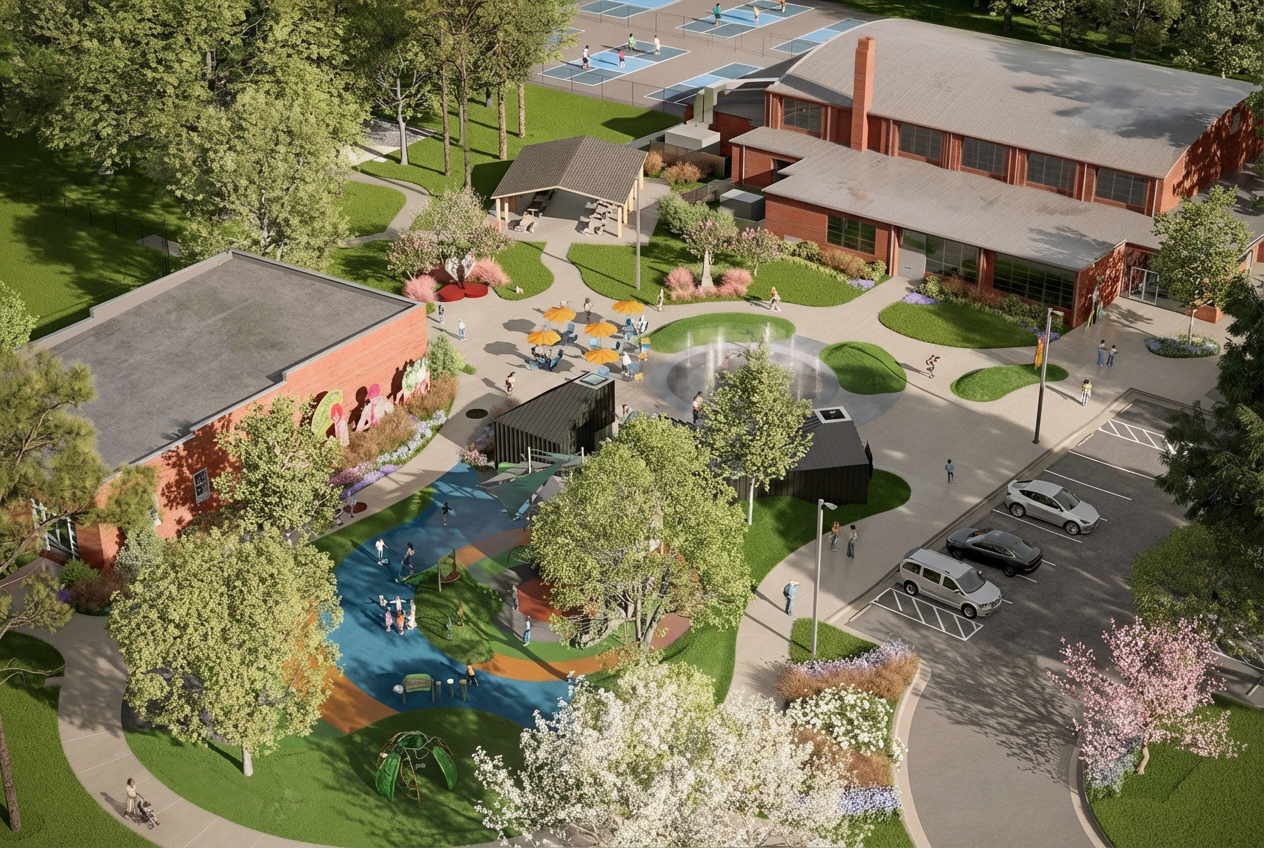
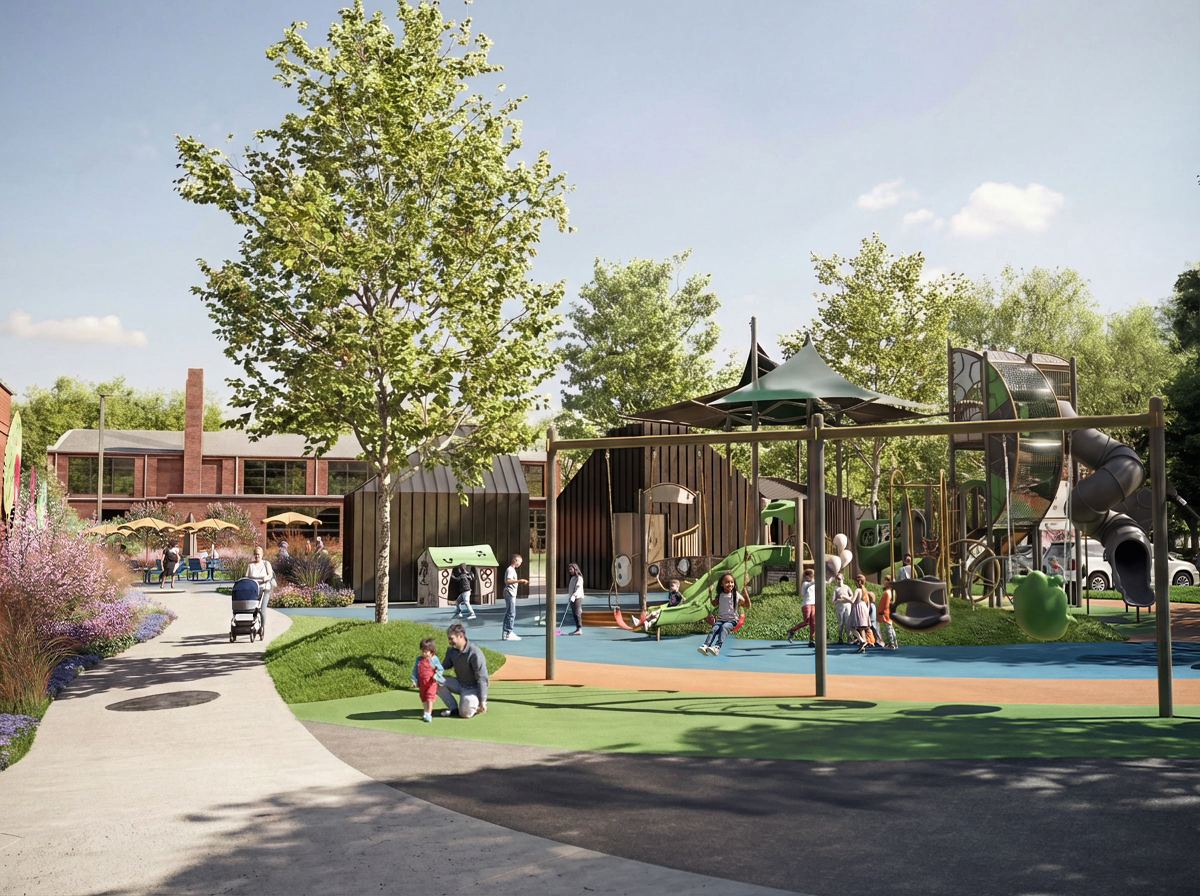
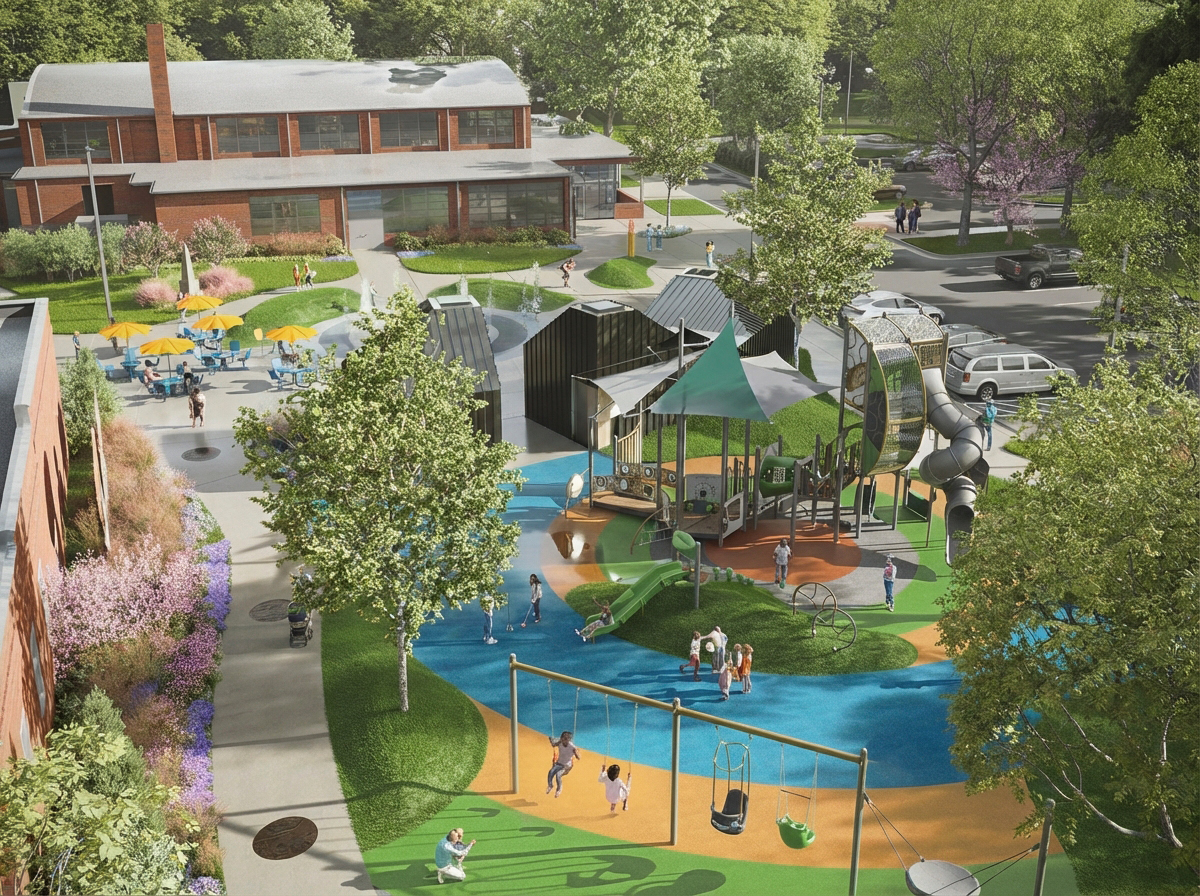
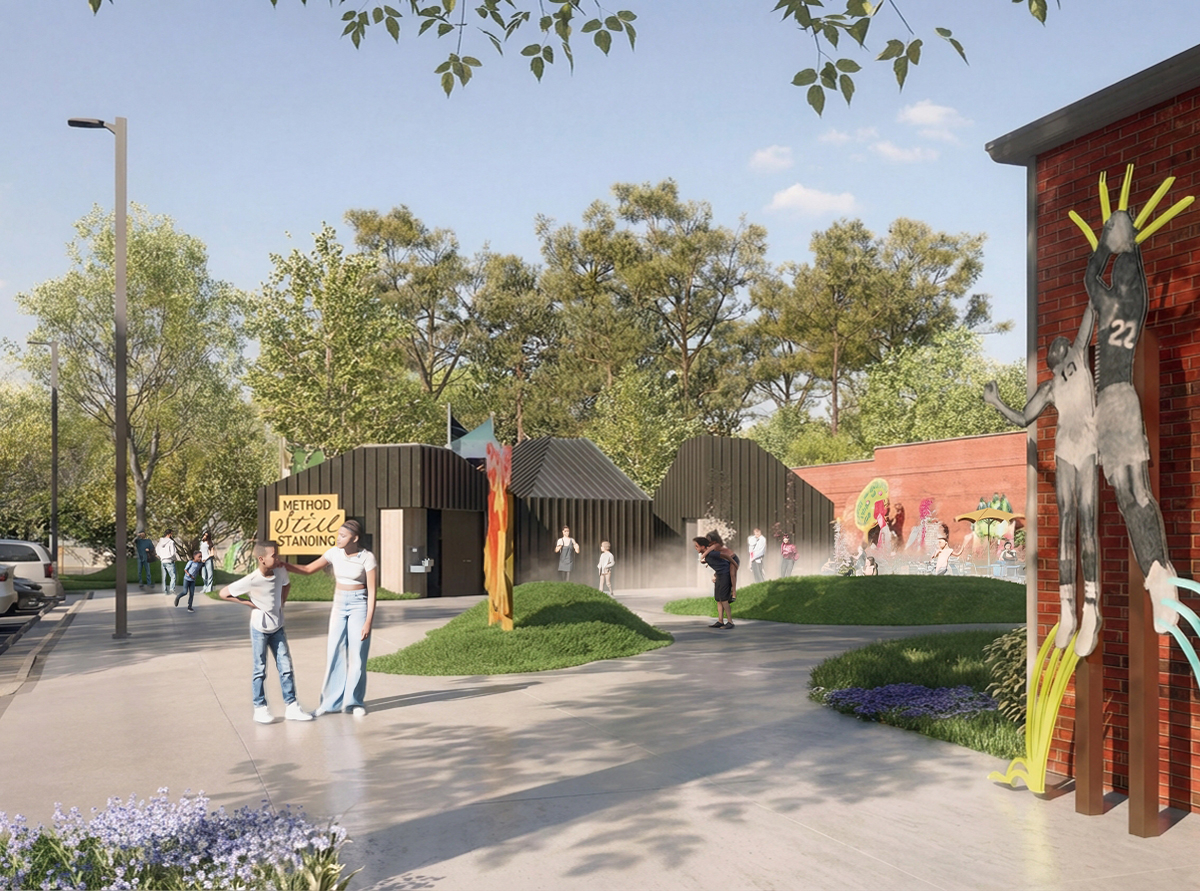
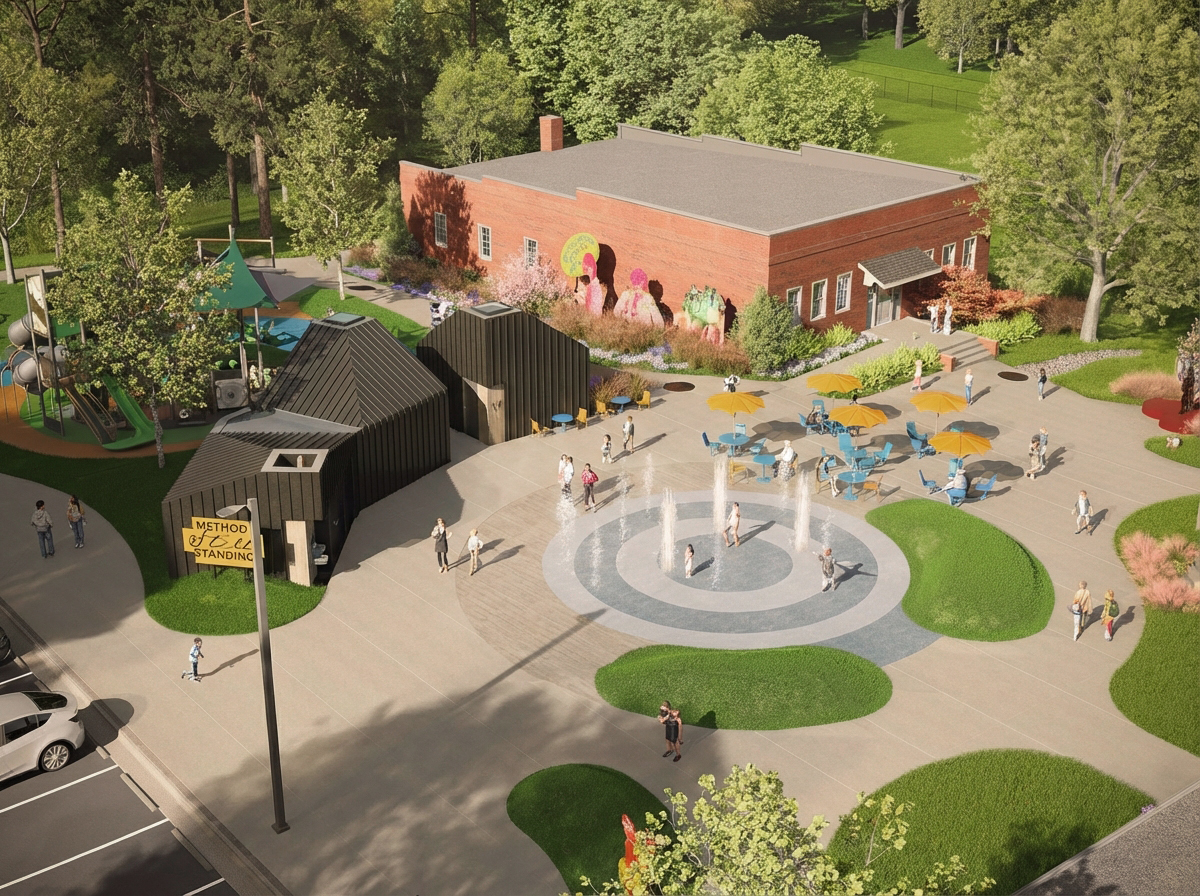 Outside is the centerpiece of the project: a new central plaza with a splash pad and playground, located between the Community Center and the Pioneers Building. Serving as a connection point to the built structures and athletic courts and fields, the plaza will serve as a primary gathering space for class reunions, drum circles, and other formal and informal events. The plaza and park will feature installations by local artist Dare Coulter, who is creating multiple large-scale, sheet metal and bronze sculpture pieces with imagery and graphics from the school yearbooks and newspapers. She is also creating metal medallions of similar imagery to be cast into the sidewalks encompassing the plaza. The Berry O’Kelly Obelisk monument, erected in 1986 by alumni and friends of the school to honor O’Kelly, will be relocated to the new plaza. Adjacent to the splash pad will be a new amenity building, housing outdoor restrooms and a pump house in support of the splash pad. Site wide, the project will provide enhanced ADA connectivity to the buildings, parking, amenities, and the Method community. New features, such as EV charging stations, will give the community access to a growing and in-demand technology.
Clark Nexsen and KEi’s approach to the Method Community Park improvements demonstrates how older buildings can be updated to meet modern needs while maintaining their historic character. These improvements will not only preserve the landmark buildings’ character and history, but will ensure that they remain viable long into the future. The project also highlights the importance of working closely with the community, whose input and contributions add to the incredibly rich legacy of Method. When complete, the improvements and new amenities, technologies, and spaces will continue to make the Method Community Park the cultural hub of its community, celebrating the past, serving the present, and poised for the future.
