5 Questions with an Expert: Don Kranbuehl on Designing in his Historic Hometown, Williamsburg, Virginia
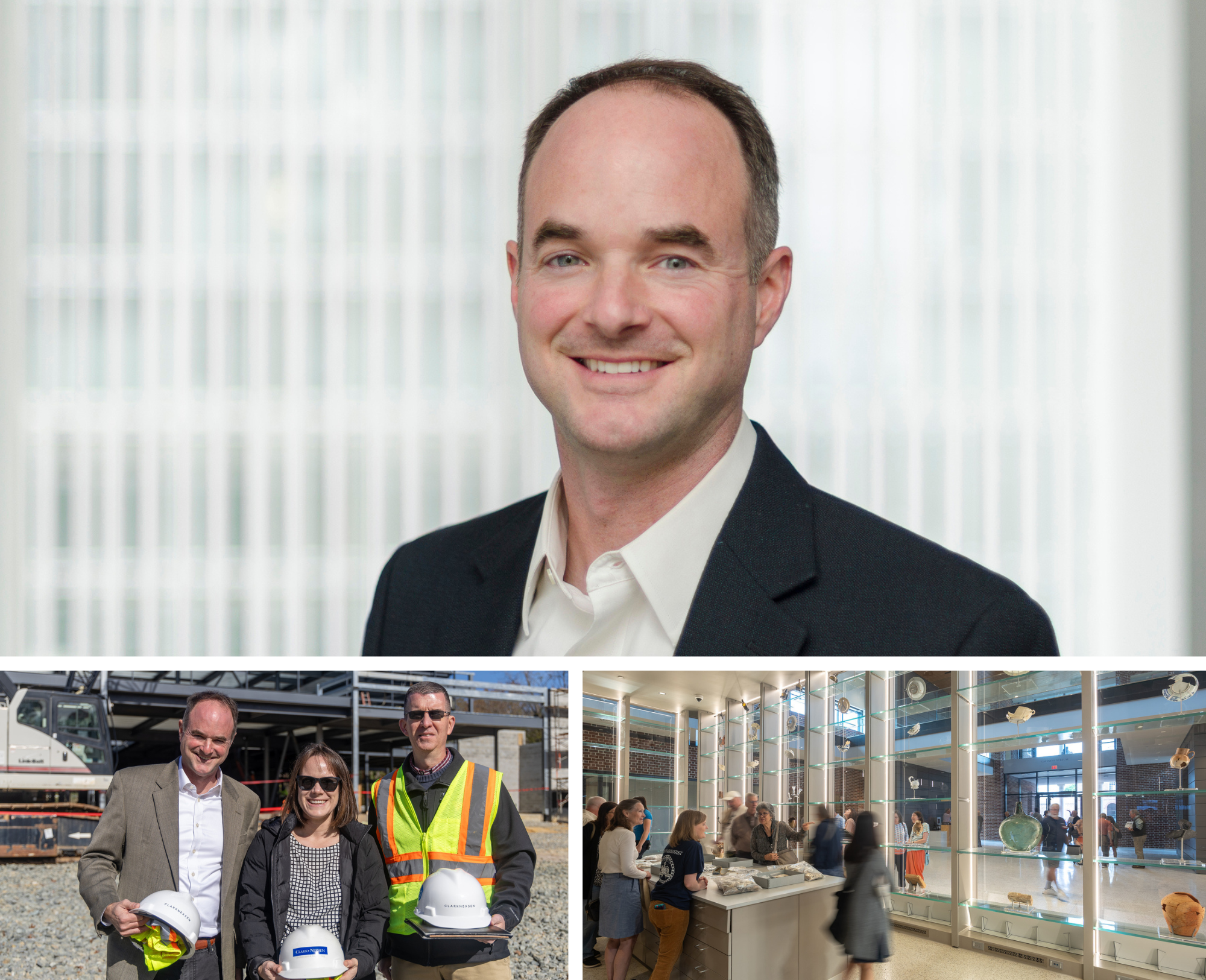 Originally from Williamsburg, Virginia, Don Kranbuehl, FAIA, LEED AP BD+C, and Principal, had the opportunity to return to his hometown to lead the design for the Colin G. and Nancy N. Campbell Archaeology Center, a state-of-the-art museum and active archaeological laboratory located within the world’s largest living history museum. Now, Don shares what it was like designing for the community he grew up in, what caught him by surprise, and more.
1. What is your connection with Williamsburg, and how did it shape your experience designing the Campbell Archaeology Center?
I grew up in Williamsburg and lived in two parts of town: one neighborhood was right across the street from William & Mary, and the other was about half a mile down the street from the Campbell Archaeology Center’s site. Since then, I’ve lived in many different parts of the country, but when this project came up, it was an amazing opportunity to work in a town I knew so well. Understanding the location and the community is the biggest element in any design. Having been born and raised in Williamsburg, I felt like I knew the place and the people — the college, Colonial Williamsburg, and the City of Williamsburg. My father was on the William and Mary faculty for more than 50 years. My mother worked for Colonial Williamsburg for over 27 years, and my stepfather served on Williamsburg’s Architectural Review Board, the Planning Commission, and City Council. I also played in the Colonial Williamsburg Fife and Drum Corps and worked in Colonial Williamsburg’s taverns and at the college for two summers. Designing a building for your hometown — it’s emotional. You want to do what is right for the place and the community.
2. From its historic location to its one-of-a-kind program, the Campbell Archaeology Center is like no other. How were you uniquely suited for the project?
It was a collision of worlds and a perfect alignment. Not only did I grow up in the area, but the program is a unique combination of research and education — project types I understand well with over 26 years of experience in those areas. In addition to balancing laboratory building requirements with a place for people to learn and work, there was also the challenge of merging the surrounding colonial context with the requirements of a 21st century museum and research facility to consider. This dialogue between the old and the new, to me, has been a career-long interest and passion.
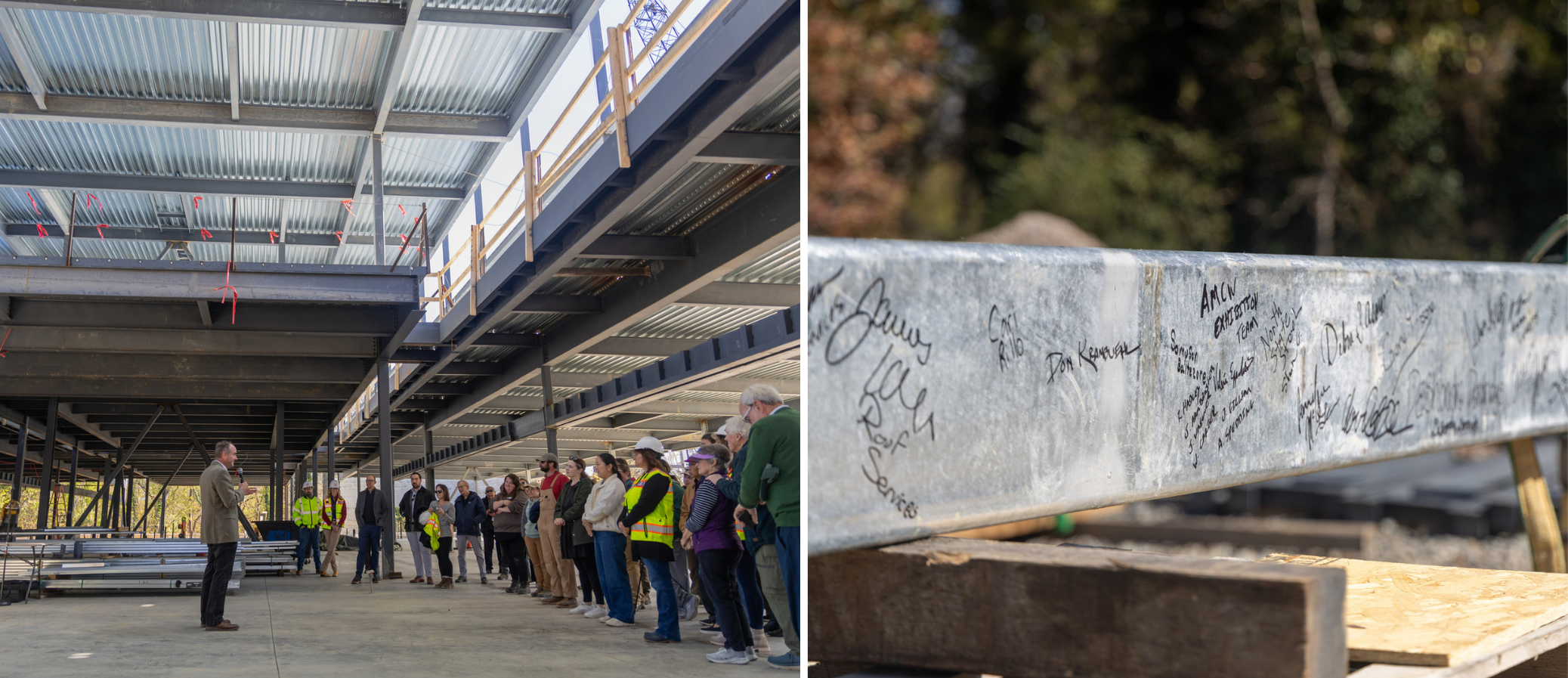
Don speaking at the Colin G. and Nancy N. Campbell Archaeology Center’s topping out ceremony.
3. Can you describe some of the design considerations made to blend the facility with Colonial Williamsburg’s historic campus?
One of the very first things we did was walk down the Duke of Gloucester Street with the Colonial Williamsburg client team and have them point out the qualities of the colonial architecture that they wished to respect. A significant amount related to understanding brickwork, from the types of mortar to the detailing of the brick arches. The materials, landscape, and scale were all critical to creating a respectful dialogue with the historic context. A material palate of primarily brick, zinc, and glass was used to blend with the existing museum campus materials and the colonial brick garden wall. The scale was critical as there’s a hierarchy of the Williamsburg Historic Area where most buildings are two stories or less. Only four buildings are taller than two stories: the Wren Building, the Capitol, the Governor’s Palace, and Bruton Parish Church. We had to be cognizant of the building’s height, which resulted in a two-story building with a wider footprint.
4. Having grown up in the area, you’re more familiar with the setting than most. Was there anything that still took you by surprise?
I’ve seen the architecture of Colonial Williamsburg my whole life, but in some ways, I was looking at it in more detail for the first time. Despite having walked by these buildings many times while working in the Williamsburg Historic Area, I gained a greater understanding of the time period and the design and detailing process through this project. It gave me an appreciation for the level of quality and detail of these buildings, especially their brickwork. They used rubbed and gauged brick, and because all of the brick was structural, it had to be built to a finer level of detail and construction that is not seen in current brick buildings. It’s interesting to see how brickwork has evolved over time — something that used to be considered more ornate has become more utilitarian. Here we tried to celebrate the brickwork as well as the artifacts.
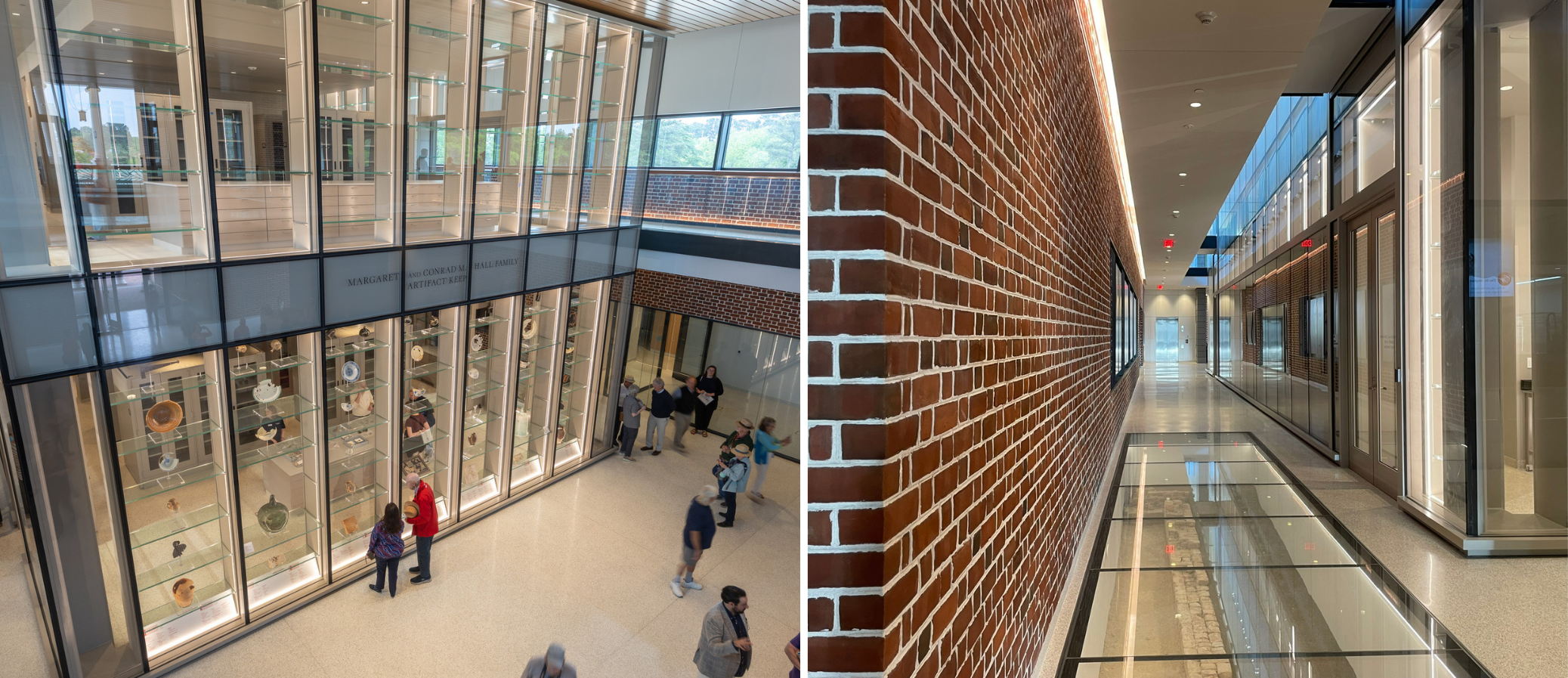
Together, the artifact displays and brick detailing celebrate and tell the story of Colonial Williamsburg.
5. How do you see the Campbell Archaeology Center impacting the community and Colonial Williamsburg as a whole?
The Campbell Center is one of the more significant buildings built by Colonial Williamsburg within the last 30 years or so, and it was incredible to be a part of it. On opening day, we celebrated with our amazing design and construction team that made the project a joy to work on from start to finish. Together, we watched the community residents and visitors walk into the building and got to experience that moment with them. The archaeologists had different activities and labs set up for the public to interact with, and it was an exciting moment to see the visitors’ engagement.
The Campbell Archaeology Center also acts as a new gateway into Colonial Williamsburg and is part of the museum campus. Using science and raw data, the center helps us understand the world we live in and where we have come from. I think it’s great that these archaeologists help us better understand history through the artifacts. As visitors start their journey through Colonial Williamsburg at the Campbell Center, they will follow a new public path that honors and tells the full story of our country’s early history — embracing all of it with honesty, depth, and perspective.
Don Kranbuehl, FAIA, LEED AP BD+C, and Principal, is an award-winning architect with over 26 years of experience in the design of academic, science and technology, and civic project types. Creating design solutions that respond to the climate, natural and built context, and public realm, Don is passionate about the relationship between architecture and its site, and he encourages a highly collaborative approach with the owner and design team. To speak with Don, please email dkranbuehl@clarknexsen.com or call 919.576.2128.
