5 Questions with an Expert: Rick Hibbett on the Design and Future of Sports and Recreation Centers
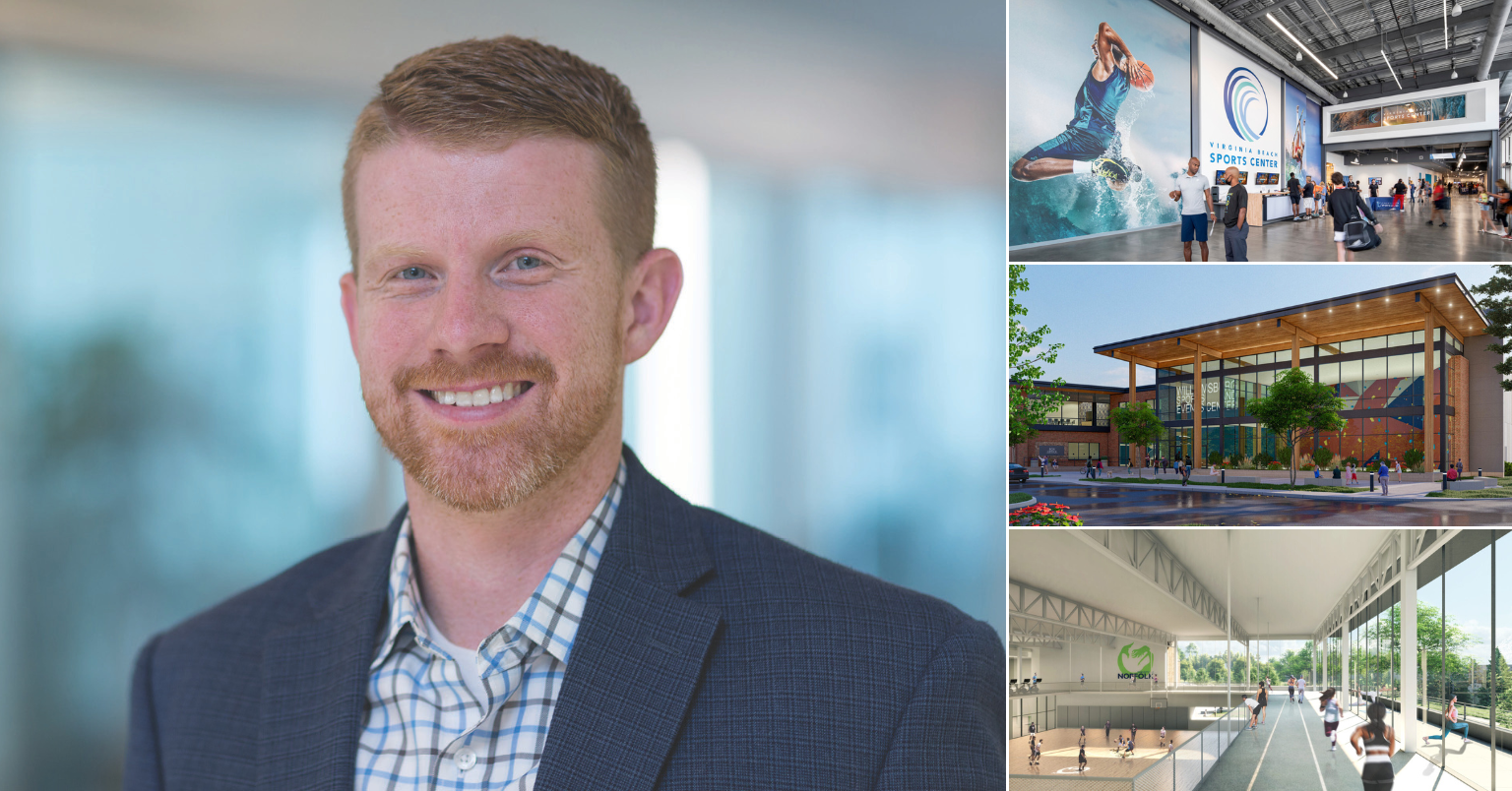 Rick Hibbett, Clark Nexen’s Client Engagement Practice Leader, shares insights gained from his experience with sports and recreation centers and identifies future market directions.
1. How do you help clients realize their vision and bring out the full potential of a venue?
First, we determine the client’s aspirations. Will the facility generate sports tourism to create an economic impact, or will it be a community asset to improve the quality of life? For example, Virginia Beach and Williamsburg were primarily looking for that next tourism component to bring people to their communities, whereas Norfolk was seeking a much more traditional recreation center. That decision drives design and programing. Once we understand their vision, we can formulate our ideas on how to achieve multiple goals. For Norfolk, that resulted in an aquatic center that will be able to host regional swim meets, giving them a tourism aspect.
To aid the client in this process and give them the ability to inform their citizens, we provide data and encourage clients to reach out to their own consultants. By analyzing quantitative and qualitative returns of existing facilities, we aim to look at all the possible benefits, both economic and quality of life. Additionally, we analyze ancillary development around the venue and talk with potential developers and existing facilities so that they may understand the impact which could drive decisions on expansions or renovations.
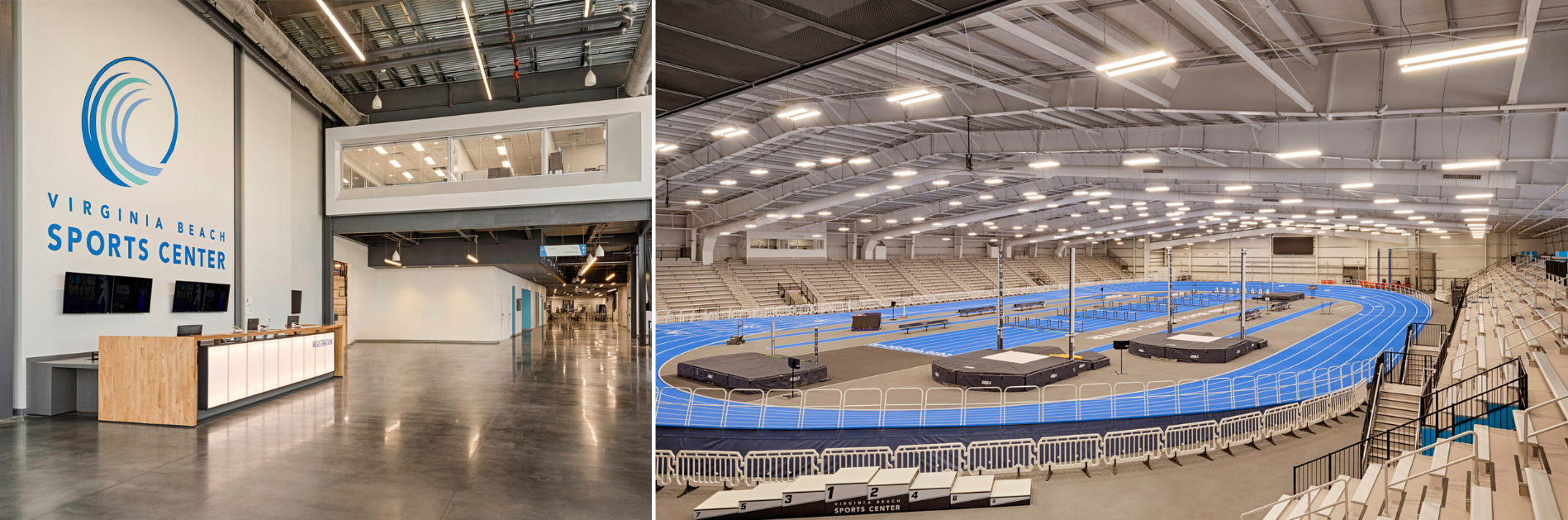
When designing the Virginia Beach Sports Center, collaboration with end users like ESPN guided lighting and paint decisions, which ensure events can be televised.
2. What makes Clark Nexsen uniquely suited to design sports and recreation centers?
Clark Nexen’s diverse portfolio and design professionals bring the depth of knowledge and understanding of how to maximize the usage of the facilities and create flexible venues. We have the experience and are able to reflect on our previous challenges and successes. Additionally, our firm’s collaborative culture ensures we meet expectations by working with end users throughout the design process. For example, we met with NCAA officials, AAU officials, ESPN, and other groups to ensure that the Virginia Beach Sports Center was being designed in a way that could host and televise events.
3. What role does the community play in the development of these kinds of facilities?
Public meetings and community engagement are key parts of the process. Not only is public engagement required in the PPEA guidelines, it’s also a nice step to guarantee that the community has a say in what is being developed. We get perspectives from various ages, socioeconomic groups, and other demographics. Their opinions on the design and how they envision using it are incredibly impactful and benefit the design and programming of the building.
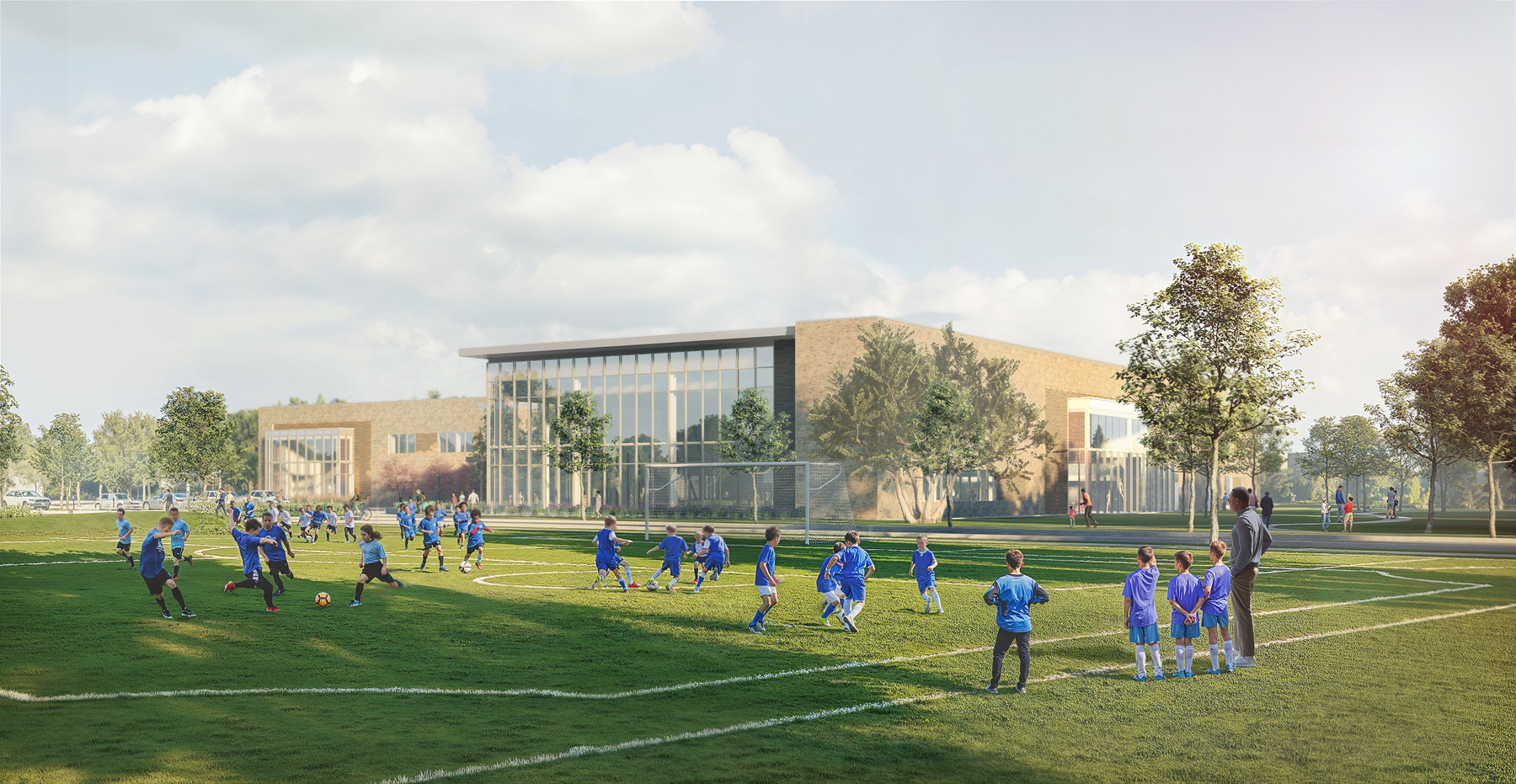
Located in Norfolk’s Wards Corner neighborhood, the Combined Recreation Center and Library will engage the surrounding community and the greater Norfolk area.
4. How is the location of sports and recreation centers determined?
It is the very first step in the process and incredibly vital to project success. Sports centers were initiated by the private sector and typically built in the middle of nowhere where the land was cheaper. Municipalities have recognized that these centers are great economic impact drivers and community assets. However, they need to be closer to our communities to not only encourage local use but also have supporting infrastructure such as hotels for folks traveling to and from the venues. When determining the location for recreation centers, considering neighboring facilities and the communities they serve is crucial to ensure equal access to community assets. Additionally, having a walkable venue is incredibly important, as transportation can be expensive and challenging in terms of timing and logistics. As a result, location is of the utmost importance and is something we help our clients with during the design process.
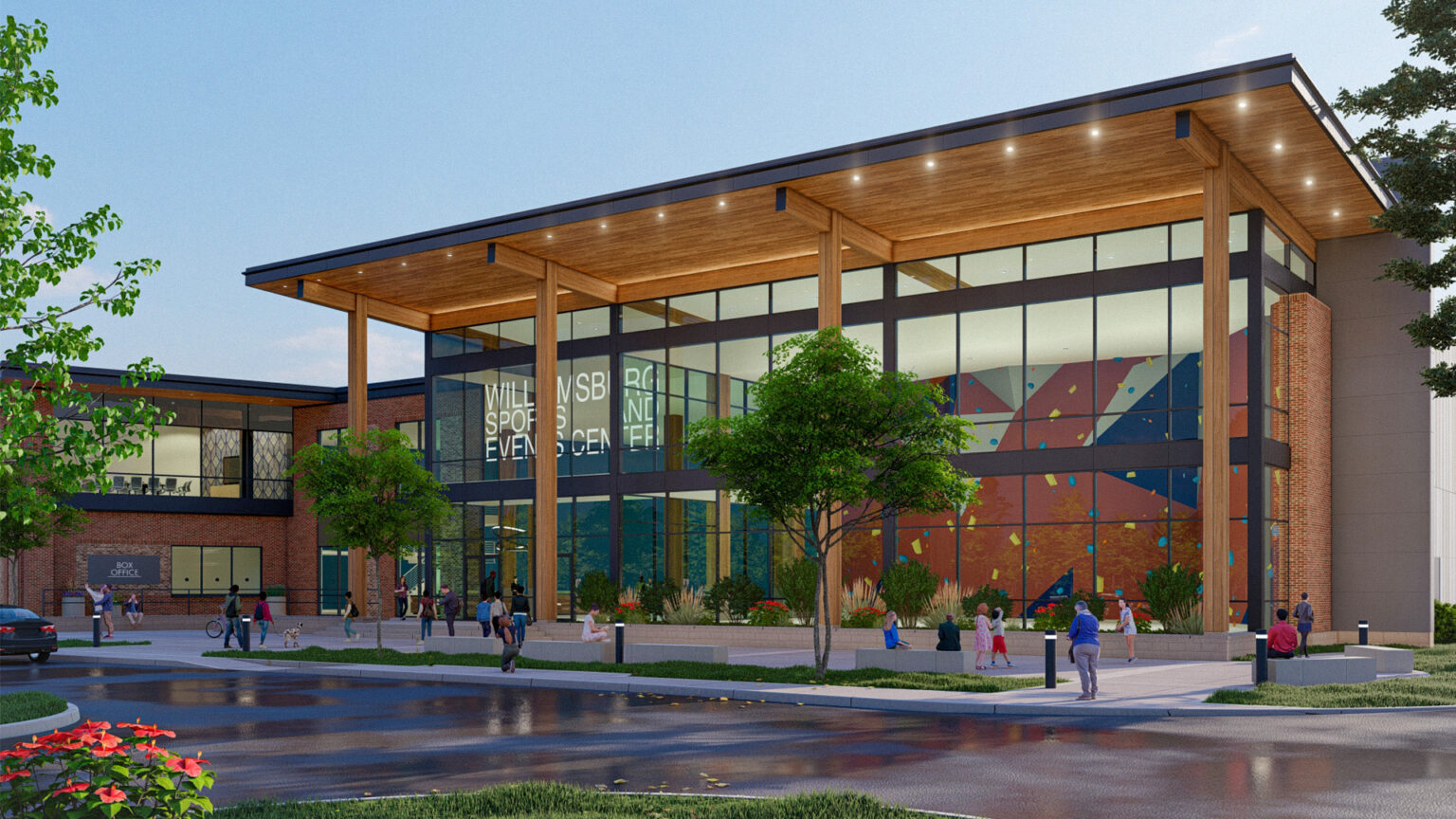
Pursuing enhanced flexibility through advanced technology, the Greater Williamsburg Sports and Event Center will house the largest conversion turf system in the country, capable of transforming hard floors into cushioned, synthetic grass.
5. What do you think the future of sports and recreation centers is?
I think that the sports tourism market will eventually become saturated. You can only build so many before you start to cannibalize each other. However, I think there’s opportunities for what I refer to as hybrid venues, and I believe this is where the market is going when we look across Virginia and North Carolina. These venues can add great value to communities and have the capacity to host smaller regional events, reaping some of the positive economic impacts from traditional recreation centers. Moreover, communities are realizing how innovative technology can aid them in making these facilities as flexible as possible. For example, the traditional way of transitioning a facility from volleyball to basketball took days, but with the help of modern technology, we can do it in a matter of 20 or 30 minutes, saving on operational costs and reducing a venue’s downtime. Additionally, I think we will see a rise in joint use facilities, like the Norfolk Combined Recreation Center and Library, which is a great model of combining assets to reduce cost while providing numerous programs for the community to benefit from.
