Designing Climate Resilient K-12 Schools Guide: Assessing Climate Risk and Comparing Solutions in North Carolina and Virginia
American students spend roughly 19% of their day at school. This is second only to time spent asleep according to Hannah Hall and Eric Nielsen’s article “How do children spend their time? Time use and skill development in the PSID.” Because schools have such a central role in children’s lives, they must stay safe, functional, and ready to operate during climate-related events. In response to rising climate concerns, Clark Nexsen initiated the development of the Designing Climate-Resilient K-12 Schools guide to help identify climate risks, evaluate vulnerabilities, and prioritize resilience strategies for schools in North Carolina and Virginia. While K-12 schools were chosen for this pilot, the guide will be beneficial for diverse project types. The guide is composed of two tools: the Climate Risk Assessment Framework (CRAF) Template and the Intervention Matrix.
The combined use of these resources will enable schools to not only understand the risk they face but also grasp the resiliency strategies that best support their needs. However, many schools lack region-specific plans that integrate infrastructure, operations, and equity to keep students safe. Therefore, this pilot guide is designed specifically for schools in North Carolina and Virginia, and to better understand its application and impact, case studies were conducted on schools within the two states. Despite this regional focus, this guide has the potential to be expanded to encompass schools throughout the US, and perhaps beyond.
Background
Climate change is already disrupting education. UNICEF’s report “Learning interrupted: Global snapshot of climate-related school disruptions in 2024” states that in 2024, 242 million students experienced school interruptions due to climate-related events. Even when schools stay open, learning becomes more challenging during extreme weather events, with extreme heat alone lowering student outcomes by up to 13% of a standard deviation according to R. Jisung Park’s research “Hot Temperature and High-Stakes Performance.” A school’s ability to protect students and staff during these events depends on its resilience. Climate-resilient schools not only reduce risks to safety but also minimize long-term repair costs and allow learning to continue.
Climate trends present growing challenges for schools in both North Carolina and Virginia. According to NOAA’s National Centers for Environmental Information (NCEI), 2019 was North Carolina’s warmest year on record, and in a high-emissions scenario, average temperatures in the state could increase by 6 to 10°F by the end of the century as explained by the North Carolina Institute for Climate Studies in their revised 2020 Climate Science Report. The rising temperatures can strain energy systems, reduce indoor air quality, and lead to overheated classrooms, particularly in older buildings without modern systems.
Virginia faces similar climate-related challenges; however, increasing rainfall, sea level rise, and land subsidence have made flooding one of its greatest concerns. Since 1950, annual rainfall in the state has increased by 4 to 6 inches according to Climate Central, and flooding, which can prevent students and staff from safely reaching school, has already intensified in the region. For example, in Norfolk, Virginia, nuisance flooding has increased by 325% since 1960 and is expected to continue rising as reported by Burgos et al. in “Future Nuisance Flooding in Norfolk, VA, From Astronomical Tides and Annual to Decadal Internal Climate Variability.”

Climate Risk Assessment Framework Template
The Climate Risk Assessment Framework (CRAF) was developed by Clark Nexsen as part of the pilot project to quantify climate risk for schools to influence decisions and investments. Climate risk is the likelihood of negative impacts due to climate-related weather events, and CRAF evaluates it by considering three key components:
- Hazards: Climate events that pose risks to schools.
- Exposure: Assets that can be damaged by hazards.
- Vulnerability: How susceptible exposed assets are to harm. This depends on sensitivity and adaptive capacity, which are defined as how strongly an asset is affected and its ability to prepare and recover.
Mirroring CRAF’s key components, the CRAF Template is organized into four steps. First, identify climate hazards in the area as well as their magnitude, frequency, and duration. This can be done with the template’s Hazard Assessment, which includes resources to help determine a site’s relevant hazards. Second, determine what assets are exposed using the Exposure Assessment. Third, assess how vulnerable those assets are with the Vulnerability Assessment. Finally, combine the results into an overall climate score using the template’s Total Risk Score to automate calculations. The total risk score uses a scale of 0-15 and is categorized as low (3-6), moderate (7-11), or high (12-15). This scoring method allows schools to identify priority risks and target the most effective resilience strategies.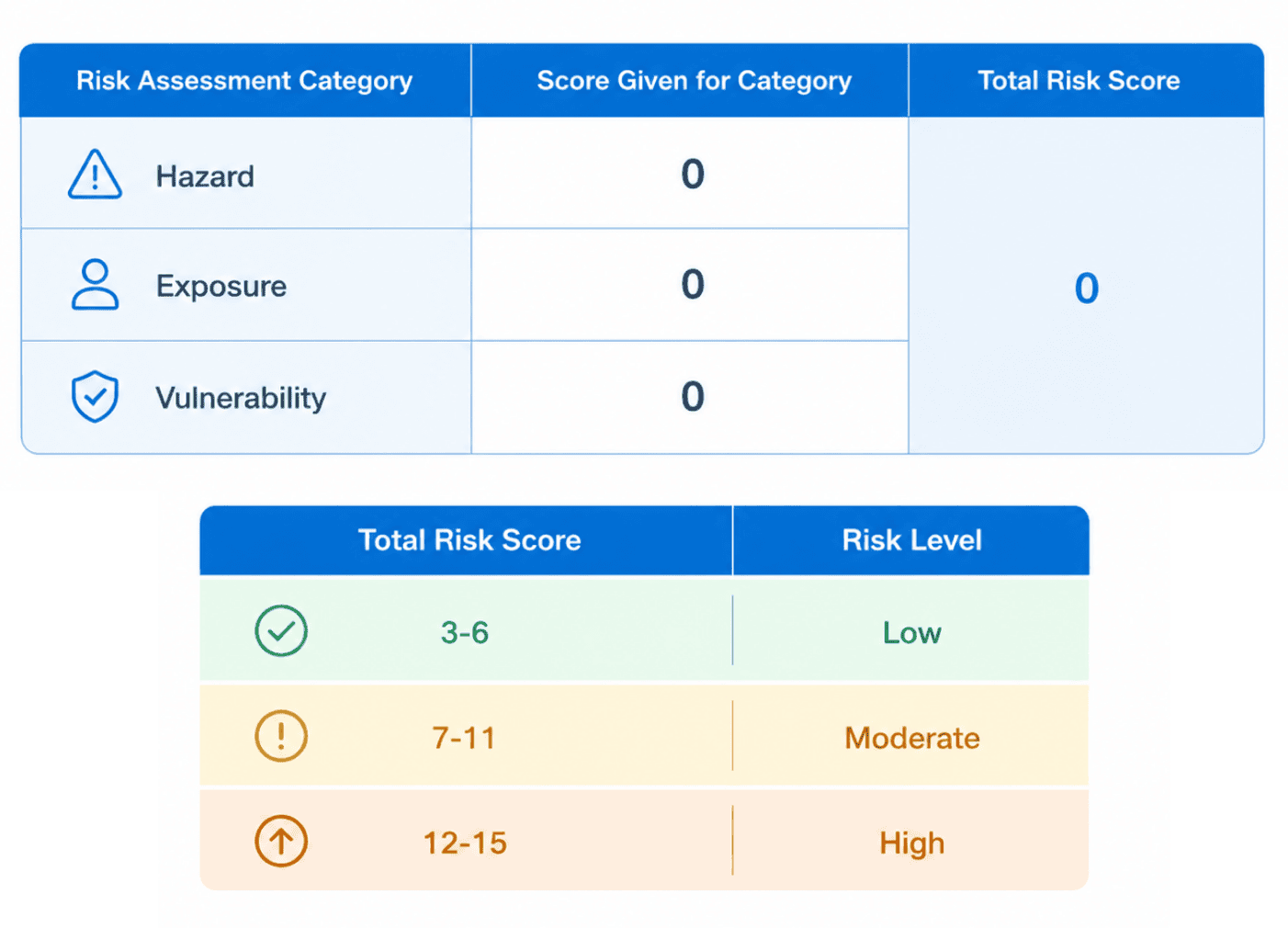 Intervention Matrix
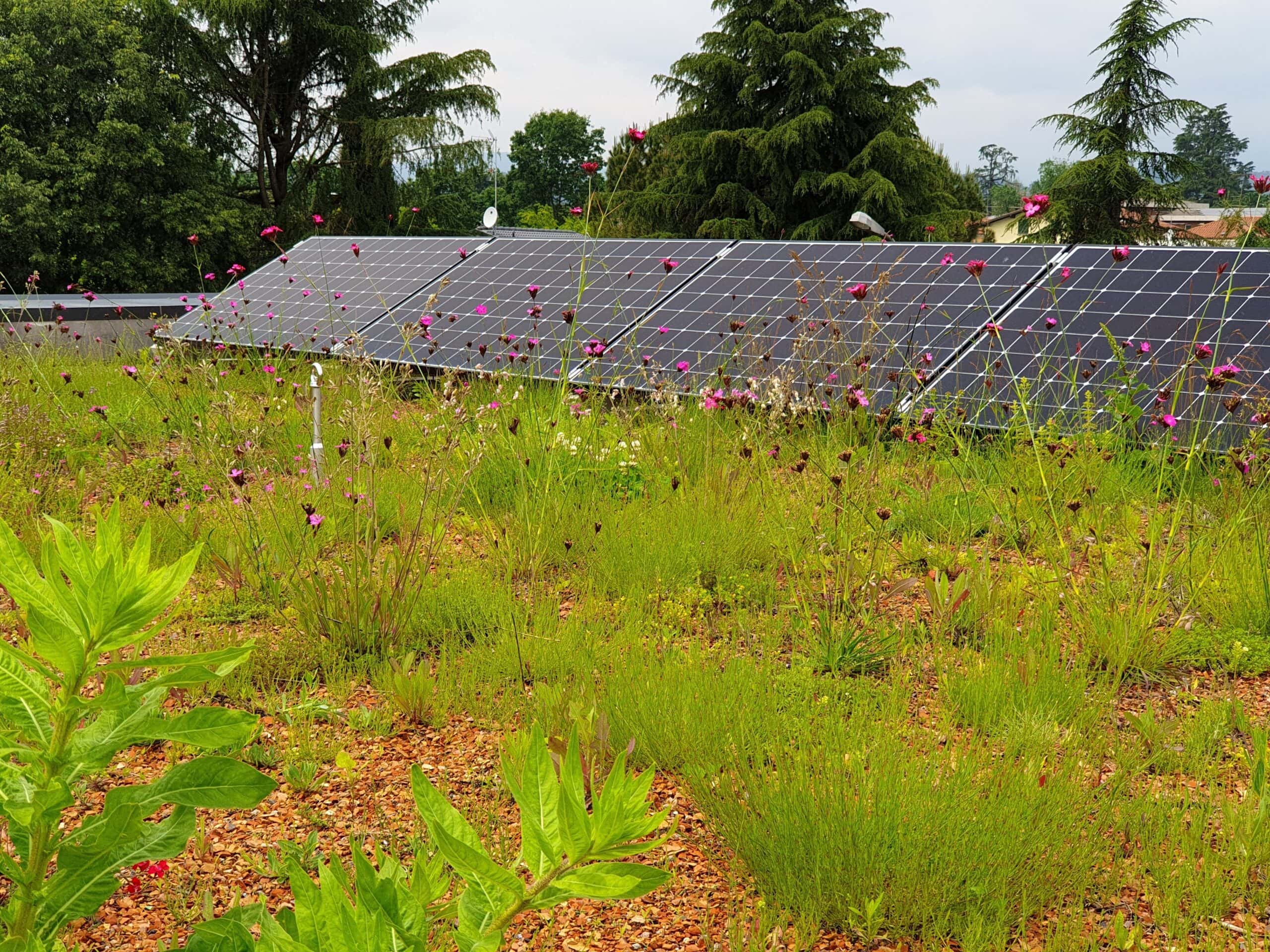
Once the level of risk is determined using the CRAF Template, appropriate ways to design or retrofit school facilities can be identified using the Intervention Matrix. The Intervention Matrix is the pilot project’s tool to help schools identify practical strategies for reducing climate risks. It has three main types of strategies: infrastructure, environmental, and operational. Infrastructure strategies seek to improve buildings through measures such as upgrading roofs, HVAC systems, and flood-resistant materials. Environmental strategies address the site through adding trees, shading, and stormwater management. Operational strategies focus on preparedness through emergency planning and response procedures. By using the Intervention Matrix, decision-makers can easily compare different solutions based on cost, benefits, and payback period. However, it is a planning tool, not a final design guide. Each school site is unique, and implementation of any intervention requires site-specific evaluation.
Applying the CRAF Template and Intervention Matrix
To demonstrate the CRAF Template and Intervention Matrix, case studies were conducted on schools in North Carolina and Virginia. The case studies are based on publicly available information, including facility characteristics, community resilience plans, hazard assessments, and environmental data. To refine site-specific strategies and develop implementation plans, additional information, structural assessments, and on-site evaluations would be required.
North Carolina School
The North Carolina school demonstrates the challenges many instructional facilities face as rising temperatures place increasing demands on building systems. Using the CRAF Template, the school received a score of 11 out of 15 and faces moderate risk. The Intervention Matrix was then consulted, and the primary recommendations focused on operational resilience, such as strengthening response plans and improving HVAC maintenance. By integrating heat preparedness into everyday operations, disruptions would reduce, and a safer learning environment would be provided for students. These recommendations emphasis how resilience requires not only infrastructure improvements but also planning, education, and monitoring.
Virginia School
This Virginia school is an older facility built in the early 1900s and has low elevations, poor drainage conditions, and exposure to FEMA Flood Zone AE. Inputting this data into the CRAF Template generated a score of 13, indicating high risk. The Intervention Matrix then guided several resiliency recommendations focused on protecting the existing facility. The recommendations included protecting critical systems, improving flood-resistant construction, strengthening emergency power, and ensuring reliable transportation.

Impact
The uncontrollable nature of climate hazards can make climate risk an uncomfortable topic, but by addressing it, climate resilience can prepare and protect assets. Schools serve as essential community spaces, and improving their resilience is critical to maintaining safe, reliable learning environments. Resilience is a team effort, bringing together designers, engineers, school leaders, and community members to create safer, healthier, and more adaptable schools. The CRAF Template and Intervention Matrix emphasize this collaboration, encouraging intentional decisions to better protect students, maintain educational continuity, and build stronger communities for the future. As the Designing Climate-Resilient K-12 Schools guide continues to be tested and refined, its impact will be amplified as its capabilities are expanded to diverse project types and locations.
Grace Williams-Siguenza is a Sustainability Student Intern at Clark Nexsen for the summer of 2026. Grace attends George Washington University, where she is pursuing her BS in Environmental and Sustainability Science.
For more information on the Designing Climate-Resilient K-12 Schools guide, please reach out to Clark Nexsen’s Sustainable Design Practice Leader, Jennifer Todd, AIA, CPHC, at jennifer.todd@clarknexsen.com or 704.840.1347.
