Danny Walker: 30 Years in Law Enforcement, Applied to Design
 For 30 years, Danny Walker lived two careers in parallel: an architect by day and an auxiliary police officer by night and on weekends. As a leader in Clark Nexsen’s Public Safety practice, he sits at the intersection of both, and that dual expertise is exactly what makes his work different. We sat down with him to discuss his journey through both fields, what he learned along the way, and how he applies his skills and knowledge to public safety design at Clark Nexsen.
You’ve spent your career working as both an architect and a law enforcement officer. How did you end up doing both?
As a child, I loved drawing, filling sketchpads with all kinds of things, though cars were always my favorite. In high school, my interest only grew. I took mechanical drawing classes all four years, even though it was a two-year program — my teacher created junior- and senior-level classes so I could continue. It was also in high school that I began working for an architect, which inspired me to attend Hampton University and earn my bachelor’s degree in architecture.
As for my career in law enforcement, a friend who had joined the Portsmouth police department told me about the civilian ride-along program, and I was hooked. I signed up every six months, as often as the program allowed, throughout high school. It wasn’t until I was already a licensed architect and newly married with three stepchildren that I decided to become an auxiliary officer. I’d spend my days working as an architect. Then I’d drive to the police department, put on my badge, grab a car, and patrol each night. Over the years, I held several positions in law enforcement, including uniformed patrol, special victim unit detective, homicide detective, community policing officer, special event supervisor, field training supervisor, and cold case investigator.
Architecture provides a technical and deliberate outlet, focused on precision and timing. Law enforcement offered a more immediate experience, requiring on-the-spot problem-solving, quick decision-making, and the ability to handle unpredictable situations with unknown outcomes.
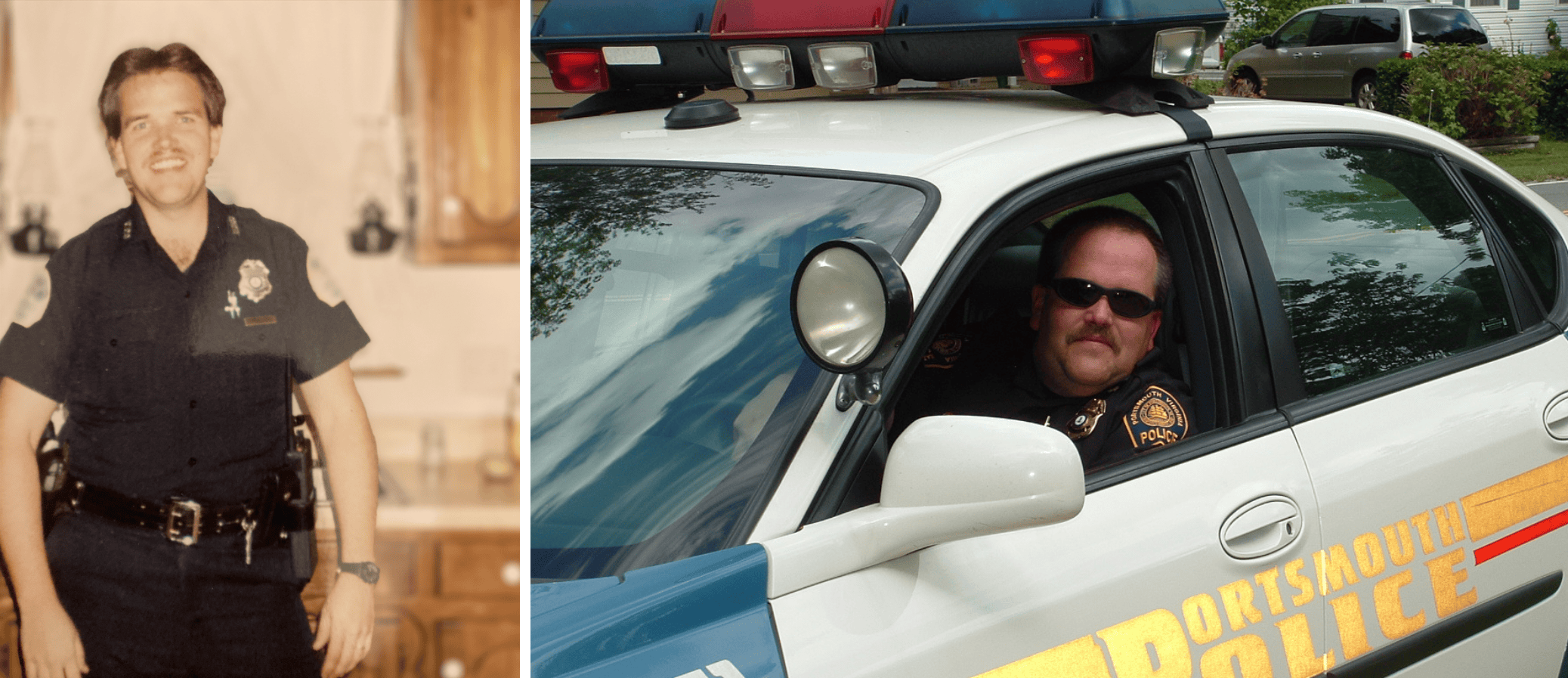
Danny serving as an Auxiliary Patrol Officer for the Portsmouth Police Department around 1986 (left) and 2016 (right).
What did law enforcement teach you about working with people, whether that’s clients or the people you mentor at Clark Nexsen?
Working in law enforcement, I met people from many different backgrounds on the worst days of their lives and built my communication skills. I learned to walk into a room without preconceived ideas, and I bring that same mindset into client meetings today. People rarely recount things chronologically, and the last thing they mention is usually what matters most to them. So, sit back, let there be silence, and really listen.
I also strengthened my leadership skills during this time. As a Field Training Supervisor, I was like a guidance counselor with veto power, guiding young officers while holding them accountable. I always told them, “Once you make a mistake, you own it. You don’t wiggle out of it or deny it.” Training the next generation, whether it’s police officers or architects, is a vital passion of mine. When I retire, I want to leave Clark Nexsen a better place, so I consistently look for opportunities to mentor like-minded young professionals.
My dad, who spent almost 40 years as a railroad supervisor, taught me something I still carry with me. Before you say something, especially when giving direction, choose your words carefully and deliver them the way you’d want to receive them. Don’t assume people understand why something matters. Tell them why. It’s a lesson that shapes every conversation I have today.
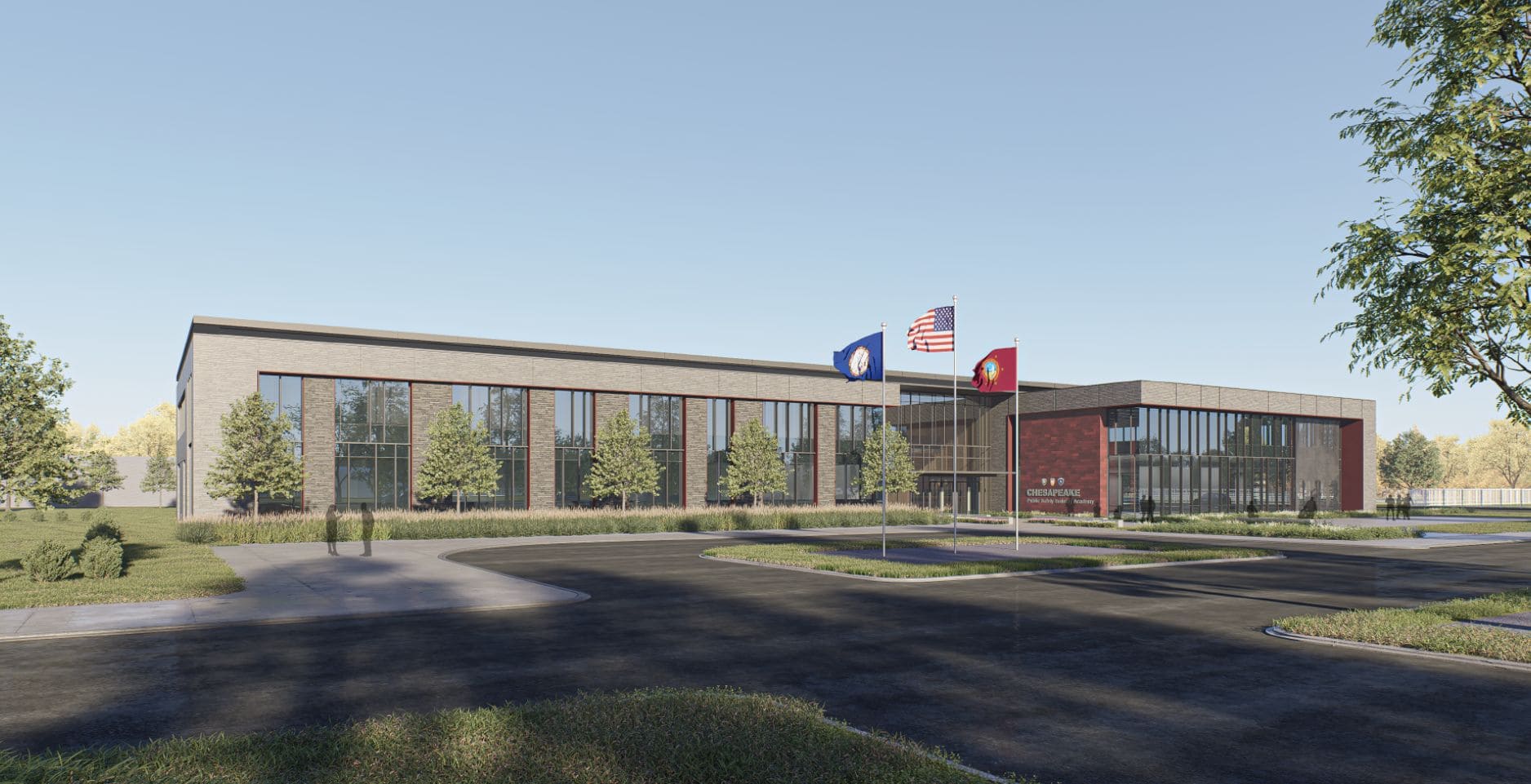
Once completed, the Chesapeake Public Safety Training Academy will feature modern police, sheriff, and fire training facilities on a single campus.
How does your experience in law enforcement inform the way you design public safety facilities?
My time on the force translates directly into the projects I work on today. We’ve designed training facilities, headquarters, operational facilities, and more. Each project type has unique design needs, and having worked in these spaces for nearly 30 years, I bring insight that is difficult to achieve without that experience or exposure.
Take, for example, law enforcement facilities. Officers wear utility belts and other gear, and given the chance, they’ll lean against a wall. Standard drywall dents and tears within a year under that kind of contact. These spaces need a more durable surface, like wainscoting, built to handle it. Acoustics matter more than people expect, too. Many of the firing ranges we design are indoors, including the Haynes/Lacewell Police and Fire Training Facility in Wilmington, North Carolina, which sits right in the middle of the city. The acoustics are engineered so tightly that people a hundred feet away can’t hear firearms training being conducted within the range.
The Chesapeake Public Safety Training Academy is a shared facility for police, fire departments, and sheriff’s office — a project type we’ve seen a rise in. Certain spaces can be shared, such as classrooms and workout rooms. However, other design aspects are specific to each agency. We were able to find a unique solution to the fire crew’s need to store reserve or training vehicles, equipment that costs millions and deteriorates quickly when left outside. Rather than solving it with a basic storage shed, we gave them a mock fire station, a space they can train in every day while protecting their equipment.
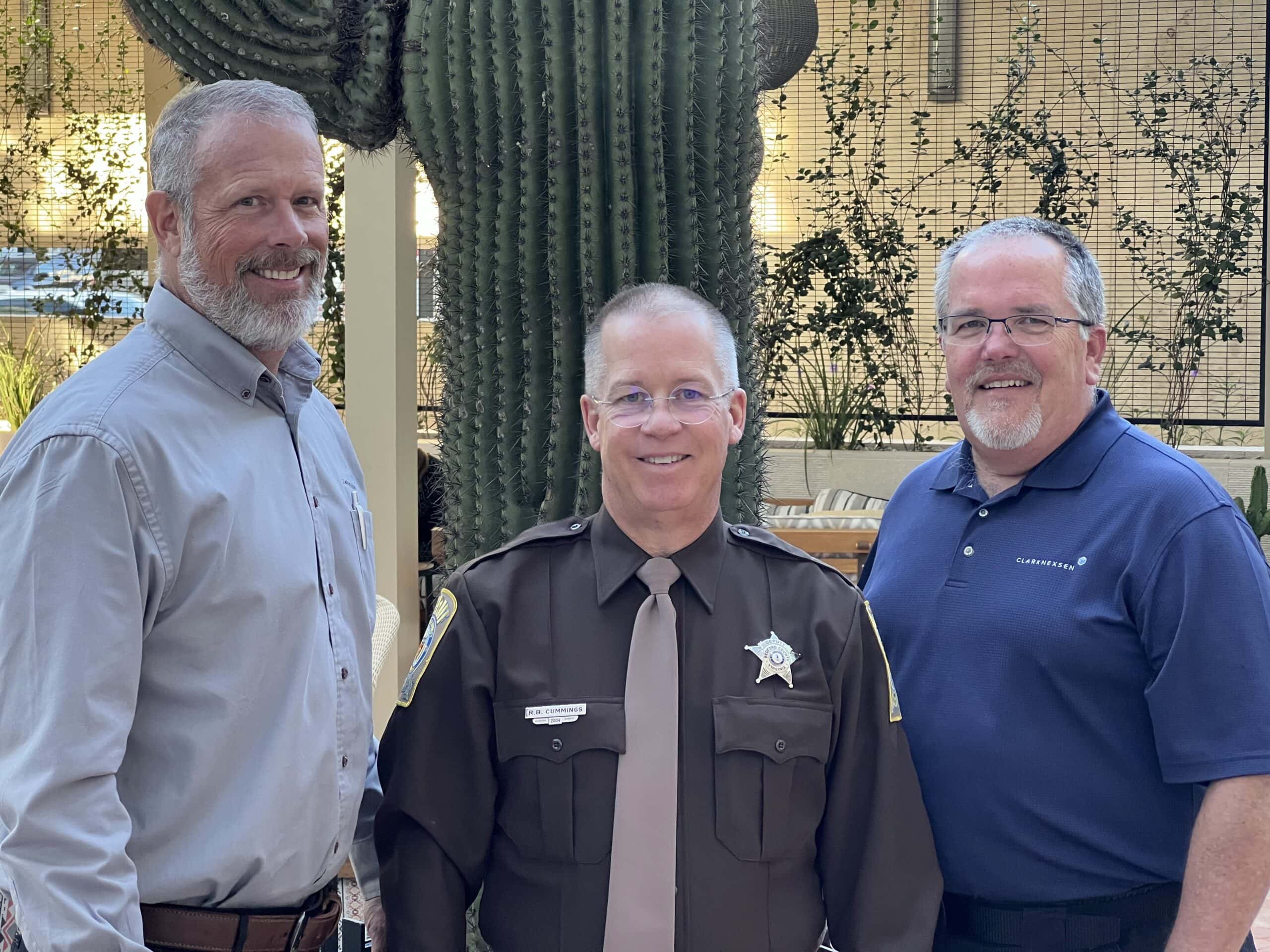
Clark Nexsen’s Public Safety Team (Left to Right): Mike Stilwell, Bobby Cummings, and Danny Walker.
How did Clark Nexsen’s Public Safety practice come together, and what did you see as your role in building it?
Early on, this work came almost entirely through word of mouth. I was part of Clark Nexsen’s federal market sector alongside Bobby Cummings, who leads our Roanoke office and has more than 20 years of experience as a reserve law enforcement officer, deputy, and firearms instructor. Between the federal contracts we were already handling and our own backgrounds in law enforcement, we noticed that public safety clients responded differently to us because we understood their world firsthand.
Bobby and I have spent the past 15 years cultivating that trust. Together, we have more than 50 years of combined public safety design experience on projects nationwide, and we’ve designed nearly 200 training facilities. My role has been to bring what I’ve seen firsthand to every project we take on. While I’m rarely the one designing these projects alone, my holistic view helps me understand not only what a space needs to look like but also how it affects an agency’s ability to serve its community.
What do you want people to understand about designing for the public safety community?
Designing for the public safety community means designing for people who may build a facility like this only once in their careers. It’s our job to ensure the investment is worth it for them. It’s not just four walls and a roof. Every decision must connect back to function and purpose. I aim to build lifelong relationships with our clients, not just transactional ones, because I understand exactly what these buildings mean to the people who will spend their careers in them.
Danny Walker, AIA, DBIA, is a Principal in Clark Nexsen’s Public Safety practice with more than 40 years of experience in law enforcement and public safety facility design. He spent nearly 30 years volunteering with the Portsmouth Auxiliary Police Unit, retiring as a lieutenant, and this experience gives him firsthand insight into how these facilities support the communities they serve. To speak with Danny, please email dwalker@clarknexsen.com or call 757.961.7763.
